💰 Emergency Fund for Nomads: How Much Do You Need?

TLDR
- Most financial experts recommend saving three to six months of essential expenses in an emergency fund.
- Digital nomads with variable income often need closer to six to twelve months for real stability.
- Your target should be based on essential monthly costs, not your total lifestyle spending.
- Emergency savings must be liquid, low risk, and easily accessible across borders.
- Building your fund gradually is practical and far more sustainable than trying to save everything at once.
Living as a digital nomad gives you flexibility, freedom, and control over your environment. What it does not give you is predictability. Clients pause projects. Contracts end. Laptops fail. Flights get canceled. Visas change. An emergency fund for world travelers is what stands between those events and financial stress.
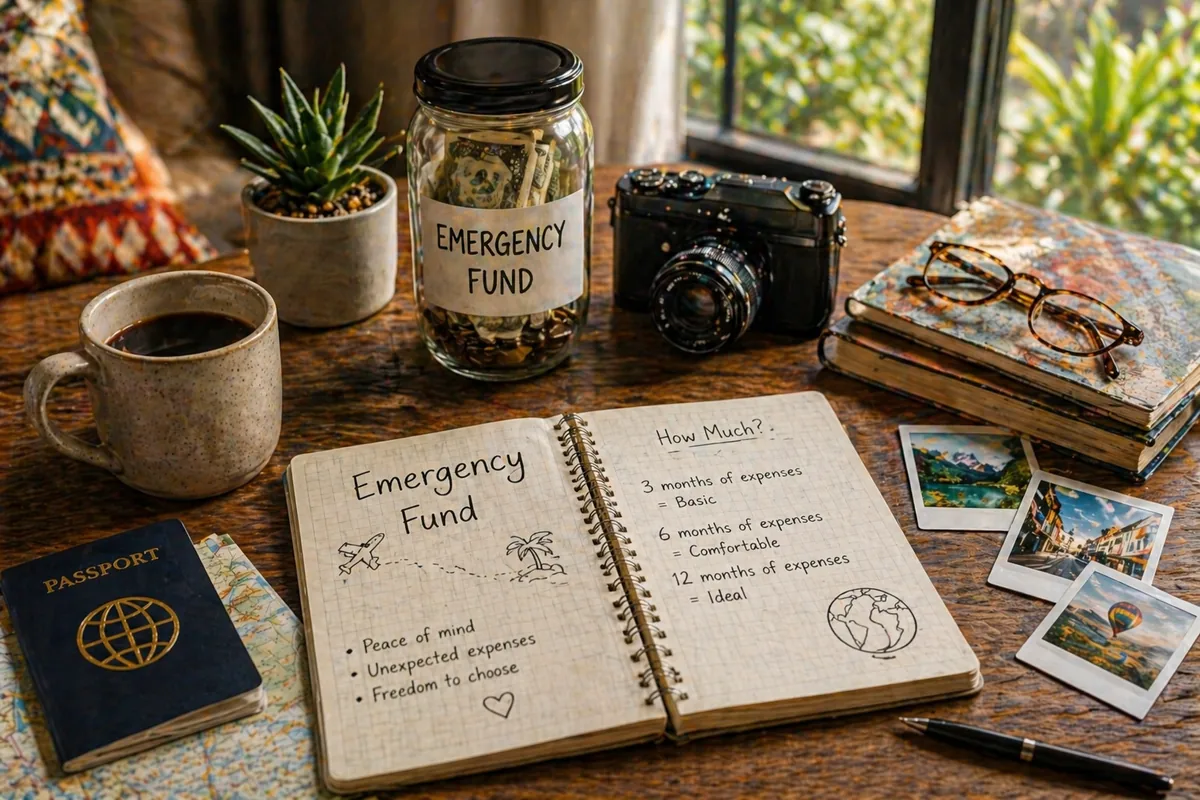
In traditional personal finance advice, experts commonly recommend saving enough to cover three to six months of essential living expenses. That baseline works for many people with stable employment. For nomads, though, the calculation usually needs more nuance to build a robust nomad financial safety net.
🏦 The Standard Recommendation for Savers
Most financial institutions suggest maintaining three to six months of essential expenses in a separate fund. The purpose is simple: if you lose income or face an unexpected expense, you should cover core needs without going into debt. There are 6 big benefits an emergency fund can bring to your daily peace of mind.
| Essential Expense | Why It Is Non-Negotiable |
| Rent/Accommodation | Covers your long stay nomad showdown bookings. |
| Healthcare | Covers premiums for international health insurance. |
| Insurance | Vital to understand why travel insurance is essential. |
| Work Tools | Monthly costs for the best website hosting. |
The idea is not to maintain your ideal lifestyle. It is to protect your baseline survival and operational capacity. Three months may be sufficient for someone with stable employment, but for those engaged in financial planning for long term travel, a wider buffer is usually necessary.
🏔️ Why Nomads Often Need More Protection
As a digital nomad, your income structure likely differs from a salaried employee. Freelancers, contractors, and remote founders often experience fluctuating cash flow. This variability increases the importance of a nomad emergency fund.
“Once I crossed the six month mark in savings, my stress level dropped. Decisions became strategic rather than reactive.”
If your income depends on client contracts, a three month fund may not feel like much of a cushion. Many professionals aim for six to twelve months instead.
This extended runway gives you time to find new work, which is why knowing how digital nomads actually make money is only half the battle; keeping it is the other. This safety net also helps avoid the problems with retirement that arise when you are forced to dip into long-term investments early.
📊 Step One: Calculate Your True Essential Expenses
Before you choose a target for how much should a nomad save for emergencies, you need a clear number. Review your spending and separate costs into essential and optional. Essential means you must pay it even if income drops to zero.
- Housing: Average monthly cost of stays.
- Safety: Your chosen nomad insurance with pre-existing conditions.
- Tools: Protecting your best laptops for remote work.
- Connectivity: Monthly bills for travel wifi hotspots.
Add up these costs and multiply by your goal. For example, if essentials are $2,500 and you want nine months of protection, your target is $22,500. This number is personal and depends on your specific lifestyle.
⚠️ Adjust for Specific Nomad Risk Factors
Now consider your risk profile. The more uncertainty you face, the larger your emergency savings for travelers should be. Ask yourself:
- Is my income predictable month to month?
- Do I rely on one primary client?
- Do I move countries frequently, requiring travel adapters and new deposits?
If you depend on one client for 70% of your income, a larger buffer protects you from scrambling. If you frequently relocate, your cushion should reflect the reality of avoiding foreign transaction fees and logistical costs. Emergency funds are about probability management, not pessimism.
💳 Where to Keep Your Emergency Fund
An emergency fund is not an investment account. Its job is stability. When deciding where to keep emergency savings as a nomad, it must be liquid, low risk, and easily accessible.
| Account Type | Pros | Cons |
| High Yield Savings | Earns interest, safe. | Transfer times can vary. |
| Multi-Currency | Access to bank accounts for US nomads. | Possible exchange fees. |
| Digital Banks | Great budgeting apps for nomads. | May have lower interest. |
Avoid placing these savings in stocks or cryptocurrencies. Markets can decline exactly when you need liquidity. Your fund should be boring, and boring is good. This ensures you can maintain building a liquid emergency fund abroad without worrying about a market crash.
💱 Currency Considerations and Exposure
As a global professional, you must think about currency exposure. If your income is in one currency but your expenses are in another, exchange rate shifts can affect your fund’s value.
Some nomads use multi-currency family budgeting techniques to split their savings across two currencies. The goal is to reduce friction and sudden shortfalls caused by volatility. Using the best multi-currency bank accounts is a practical way to manage this without complexity.
📈 Building the Fund Gradually
Reaching twelve months of expenses can feel overwhelming. Instead of aiming directly for the final number, break it into stages. Each stage strengthens your nomad financial safety net.
- Milestone 1: One month of essential expenses.
- Milestone 2: Three months (the standard baseline).
- Milestone 3: Six months (true stability).
Automating transfers helps, even if you are just starting with digital nomad finance 101. During high-income months, allocate a larger percentage to accelerate progress. Many nomads prioritize this fund before investing in the best power banks or other high-end gear.
✅ What Counts as a True Emergency?
An emergency fund is not for lifestyle upgrades or discounted flights. It is strictly for critical situations.
- Medical expenses not covered by your travel insurance for freelancers.
- Sudden income loss.
- Urgent travel home or safety tips related emergencies.
- Replacing broken essential tools like portable monitors.
If the expense is uncomfortable but not critical, pause before dipping into your nomad emergency fund. Once you use part of the fund, rebuilding it becomes the absolute priority.
👋 Conclusion
For digital nomads, an emergency fund is foundational. While the standard guideline of three to six months is a starting point, the reality of financial planning for long term travel suggests that six to twelve months is often better. Start by calculating your costs, multiply by your target months, and build gradually.
Keep the money liquid and low risk. Your emergency savings are not just protection; they are permission to operate confidently. This kind of financial stability is what truly supports long-term freedom.