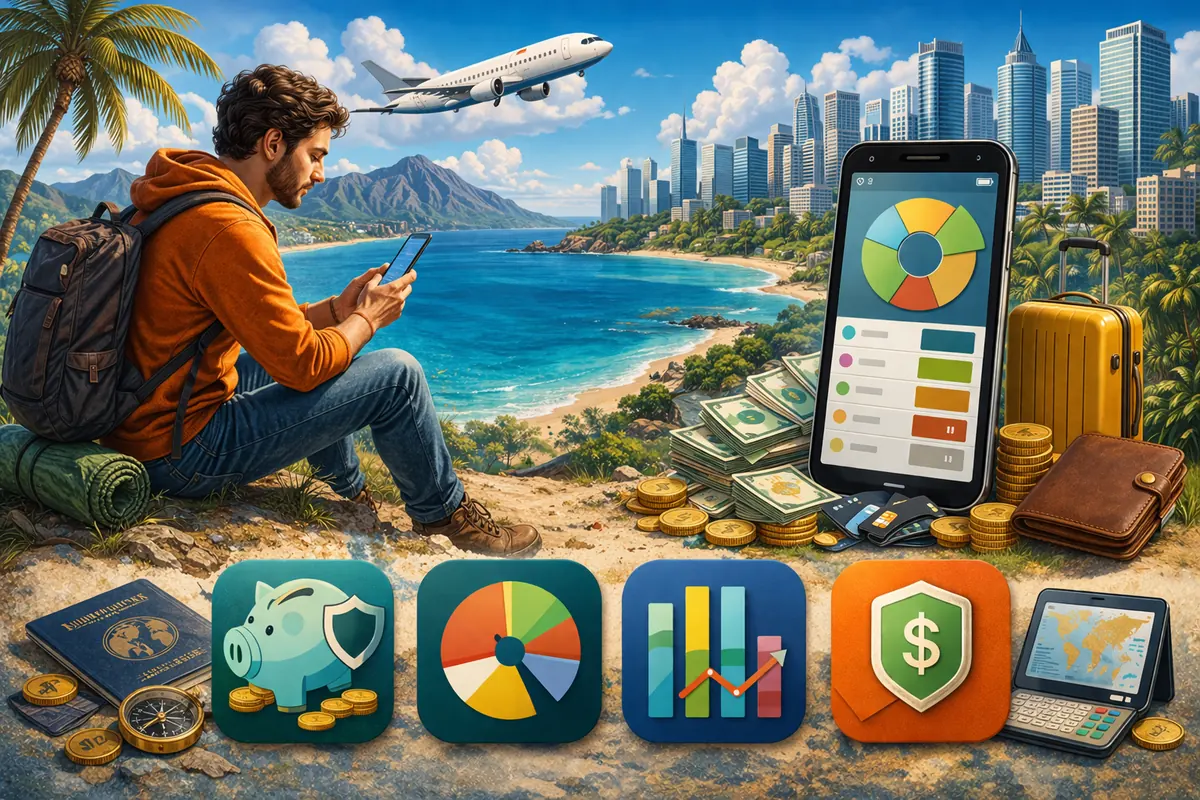
📱 Best Budgeting Apps for Digital Nomads

TLDR
- YNAB: Best for proactive, zero-based budgeting with irregular income.
- Credit Karma: The free, passive successor to Mint for basic expense tracking.
- PocketGuard: The easiest way to see your daily “Safe to Spend” limit.
- Monarch Money: A premium, all-in-one dashboard for long-term wealth.
- TravelSpend: The modern standard for tracking spending in multiple currencies.
Budgeting matters when you are living life on the move. As a digital nomad, your income and spending patterns are not tied to a single location or a predictable pay cycle. This makes it surprisingly easy to lose track of money if you do not use the right tools.
When you are jumping between currencies and cost-of-living tiers, small leaks in your budget can quickly turn into significant financial stress.
After years of testing various apps while working remotely, I can confidently say that the best budgeting apps for digital nomads do more than track expenses. They help you build awareness, reduce stress, and make smarter financial decisions across borders.
In 2026, these apps have evolved into sophisticated remote work financial apps that offer automated bank syncing and real-time dashboards tailored for the location-independent professional.
🚀 Why Digital Nomads Need Budgeting Apps
When you earn in one currency and spend in another, manual spreadsheets quickly become fragile and prone to error.
A dedicated nomad expense tracker 2026 setup consolidates transactions automatically, helping you prepare for tax season and build emergency reserves without guessing.
Structure creates freedom. Without a clear system, you risk the “stealth drain” of foreign transaction fees and unmonitored subscriptions that you forgot to cancel three countries ago.
Visibility allows you to stay proactive rather than reactive with your money, ensuring that your lifestyle remains sustainable over the long term.
Also read: Emergency Fund for Nomads: How Much Do You Really Need?
💎 YNAB (You Need A Budget)
YNAB remains a top pick for nomad money management because of its zero-based philosophy: every dollar gets a job before you spend it. This works perfectly for freelancers with irregular income.
- Proactive Planning: Instead of looking at past mistakes, you allocate money for rent, travel, and international health insurance in advance.
- The “Age Your Money” Rule: YNAB encourages you to eventually spend money you earned 30 days ago, which is the ultimate shield against the “paycheck to paycheck” cycle on the road.
- Flexibility: If you overspend in your “dining out” category while exploring a new city, YNAB makes it easy to move money from another category to cover it.
For nomads who want discipline and forward planning, the system can be transformative. It forces you to think a month ahead rather than living paycheck to paycheck, even when you earn well.
🔄 YNAB vs Mint for Nomads: The 2026 Reality
For a long time, the debate was YNAB vs Mint for nomads. However, with Mint fully transitioned into Credit Karma, the landscape has shifted significantly.
- Credit Karma: Offers free automatic expense tracking and simple financial overviews. It is a solid choice for those who want a passive “set it and forget it” dashboard to monitor their net worth.
- YNAB: Remains a paid, hands-on tool that requires more effort but yields much higher financial clarity and behavioral change.
If you are a heavy Apple user, Copilot Money has emerged as a top multi-currency budgeting app for iPhone. It uses machine learning to categorize transactions with incredible accuracy, though it is currently limited to the Apple ecosystem.
🛡️ PocketGuard
PocketGuard is designed for the nomad who hates micro-managing categories. It calculates your bills and goals, then gives you one simple number: your “In My Pocket” amount.
According to Forbes Advisor’s 2026 Banking Review, its simplicity makes it one of the highest-rated apps for avoiding overspending while traveling.
For nomads who do not want complex budget structures but still need guardrails, PocketGuard strikes a great balance between automated travel budget tools and total simplicity.
👑 Monarch Money: The All-in-One Command Center
If you see budgeting as part of a larger wealth-building strategy, Monarch Money is the 2026 heavyweight. It is a paid platform that acts as a full financial dashboard, tracking your investments, business income, and long-term trends.
Monarch is particularly effective for those who have a complex portfolio of assets across multiple countries. It allows you to customize categories and track liabilities alongside your liquid cash, providing a high-level view that simpler apps often lack.
This makes it the best expense tracker for frequent travelers who are also managing long-term investments.
Also read: How Expat Families Manage Money Across Multiple Countries
🎒 EveryDollar and Goodbudget
Both apps use the “envelope system” to help you stay disciplined. EveryDollar is highly intuitive for beginners who want a clean interface, while Goodbudget is great for those who prefer manual entry for privacy reasons.
As you transition between countries, manual entry can actually help you stay more aware of the local cost of living. It forces you to translate the price on the receipt into your home currency mentally.
This awareness is vital when assessing how to use crypto safely when living abroad to maintain liquidity without overspending.
Also read: Best Multi-Currency Bank Accounts for Nomads
✈️ Travel Budget Apps: Logging the Journey
While the apps above handle your overall finances, many nomads use specific travel budget apps to track day-to-day trip costs. TravelSpend and MoneyWiz 2026 are current favorites for this niche.
These are excellent for tracking spending in multiple currencies because they allow you to log expenses in any currency and automatically convert them to your home currency using real-time rates.
This is vital when you are crossing borders frequently and need to keep your trip spending aligned with your broader financial goals.
🛠️ Manual vs. Automatic Tracking
Choosing between automatic syncing and manual entry is a personal decision.
- Automatic: Saves time and reduces the risk of missed transactions, which is valuable when you manage multiple income streams and avoiding foreign transaction fees.
- Manual: Best for building “spending friction.” When you have to type in every bus fare, you are less likely to impulse buy.
The World Bank Global Findex 2025 highlights that the rise in open banking has made these integrations much more stable than they were just a few years ago, allowing for more reliable automated travel budget tools.
🏁 Final Thoughts
The best budgeting apps for digital nomads are the ones you actually use consistently. Whether you want a hands-on system like YNAB or a travel-heavy logger like TravelSpend, the goal is clarity across borders.
When you manage your money with intention, you can focus on the reason you started this journey in the first place: freedom.
For more tools to optimize your mobile life, check our list of 15 gadgets every digital nomad needs to ensure your hardware is as smart as your software. If you are a freelancer, remember that freelancing vs remote jobs each carry different budgeting requirements for tax and stability.
Related Reading
- Digital Nomad Finance 101: How to Manage Money While Traveling
- Top Travel Credit Cards for Digital Nomads
- How Digital Nomads Actually Make Money
- Avoiding Foreign Transaction Fees While Traveling
- Safety Tips for Solo Digital Nomads