Safety Tips for Solo Digital Nomads

Key Take-Aways
- Stay alert in public spaces, look confident, and keep your valuable electronics concealed.
- Protect your livelihood by utilizing virtual networks, secure passwords, and cloud backups.
- Diversify your money across multiple accounts and never carry all your cards at once.
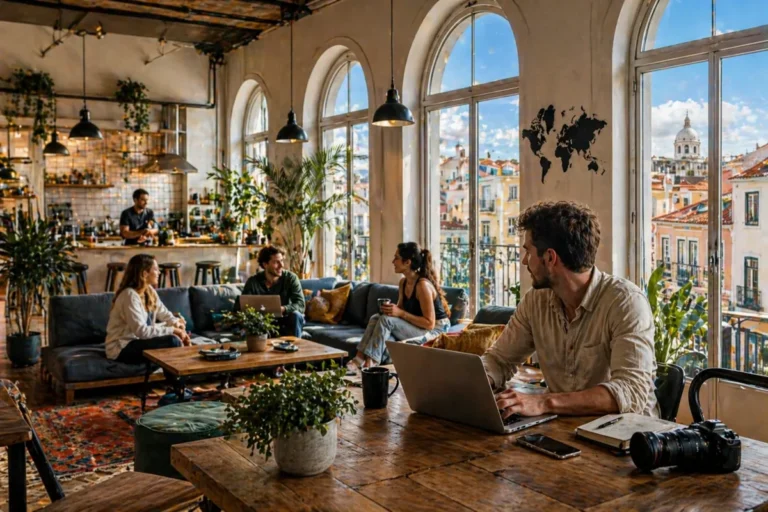
Working remotely while traveling the world is an incredible privilege. You can wake up in one country, finish your daily work from a local café, and watch the sunset somewhere entirely new.
That kind of lifestyle freedom is hard to beat, attracting thousands of individuals to discover how to become a digital nomad every single year.
But when you travel and live completely alone, security becomes your personal responsibility. There is no coworker, HR manager (hahahaha), or travel partner automatically looking out for you.
Your situational awareness, proactive preparation, and daily habits matter more than anything else to ensure consistent solo digital nomad safety.
The good news is that solo travel does not have to be an inherently risky gamble. With the right precautions and realistic planning, it can actually be one of the safest, most empowering, and most rewarding ways to explore our planet.
I would strongly recommend every nomad to get flexible yet robust international insurance, and for that, SafetyWing is my go-to – both for frequent travelers and for long-term stays abroad!

As for digital safety, you absolutely need a reliable, strong VPN – for that, I’d suggest NordVPN. It’s my personal favorite.

Finally, to keep your money secure, you can’t go wrong with Wise as an international bank/wallet, both to transfer your money at minimum cost and to keep an emergency fund which is accessible anywhere!

Stay Aware of Your Surroundings
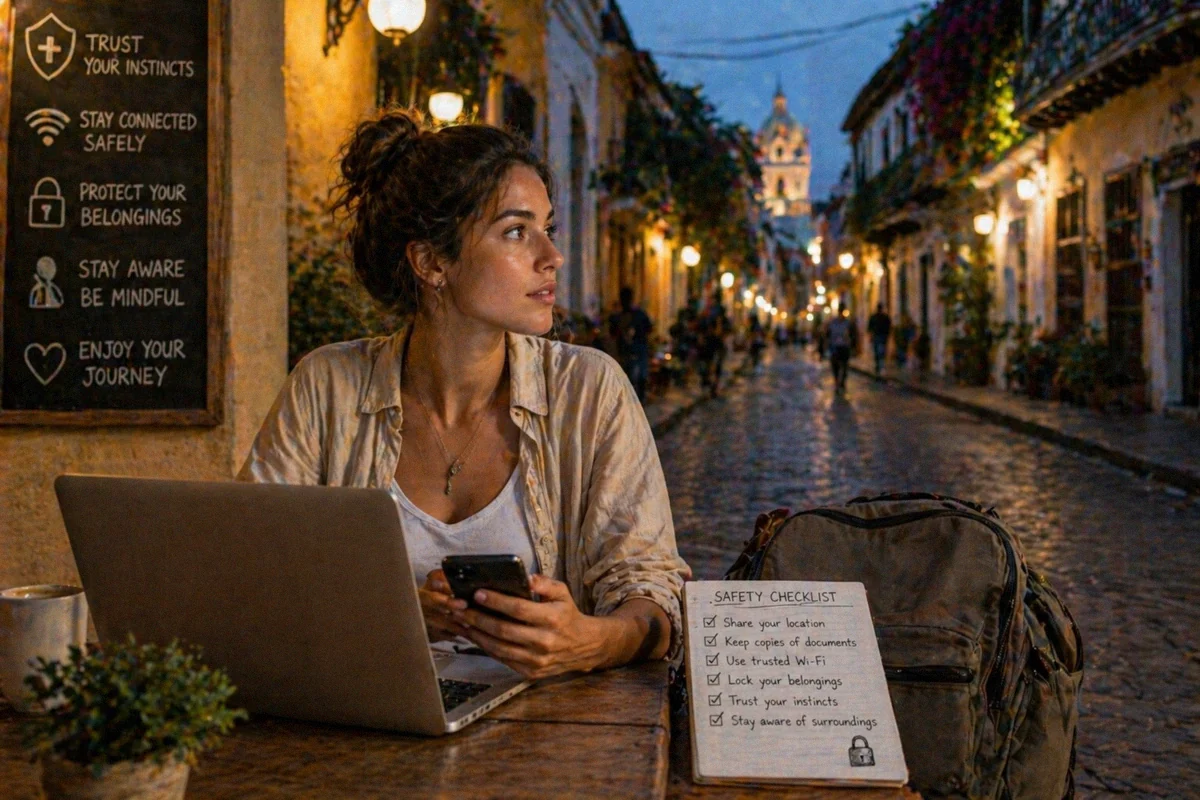
Developing consistent situational awareness is one of the most effective, zero-cost solo travel safety tips you can implement.
Most opportunistic crimes involving foreign travelers occur when an individual appears visibly distracted, confused, or entirely unfamiliar with their immediate surroundings.
Walking down a crowded, unfamiliar city street while staring blankly at a map on your smartphone screen is a prime example of a habit that invites trouble.
Don’t be another one of those oblivious zombies I see on the streets all the time, face in their phone, barely avoiding obstacles at the last second.
Instead, make a conscious effort to move with confidence, keeping your head up, even if you are still figuring out your exact route.
If you find yourself lost and need to check your GPS coordinates, simply step into an open shop, pharmacy, or café first. This minor adjustment instantly reduces your vulnerability and stops you from attracting unwanted attention from opportunistic pickpockets.
It is equally wise to avoid completely isolated side streets at night, choosing instead to walk along well-lit paths that feature regular foot traffic.
Bustling commercial avenues, active restaurant rows, and busy public plazas naturally provide an organic layer of community safety.
Finally, never dismiss your natural intuition. If a specific street, venue, or social interaction feels uncomfortable or strange, remove yourself from the situation quickly, calmly, and without apology.
Protect Your Devices and Digital Life
For the modern remote worker, a laptop, tablet, and smartphone are not merely entertainment gadgets. They represent your entire livelihood, income stream, and professional reputation.
Experiencing a theft or hardware failure while working abroad does not just mean dealing with the financial annoyance of replacing physical items.
It can instantly interrupt your active client projects, compromise sensitive company data, and cut off access to your vital personal accounts.
Because your gear is your lifeline, you must establish strict hardware and software protections. Never leave your workstation unattended in a public café, even for a brief moment to use the restroom.
Ensure all your primary devices are locked with robust passwords and biometric data, and explicitly require two-factor authentication on every single critical email, banking, and professional account.
| Digital Security Measure | Primary Benefit | Recommended Action |
| Two-Factor Authentication | Prevents unauthorized account logins | Enable app-based authenticators on all accounts |
| Cloud Backups | Protects work files from hardware loss | Set up automatic nightly syncs |
| Encrypted Connections | Shields data from public network snooping | Utilize a highly rated virtual private network |
Public internet connections represent another incredibly common vulnerability for remote professionals.
When utilizing shared networks in public spaces, airports, or open lounges, shielding your active data transfer is paramount for comprehensive safety for remote workers.
Taking just a few moments to establish a secure, private connection ensures that your passwords and banking credentials remain entirely hidden from malicious actors on the same network.
I’ve said it a thousand times, and I’ll say it again: USE A VPN!
Keep Documents and Money Organized
Few travel scenarios cause more immediate anxiety than realizing you have lost your passport, main debit card, or cash reserves in a foreign country.
The most effective way to mitigate this financial risk is to practice strict diversification. Never store all your physical currency, backup credit cards, and official identity documents in a single wallet or bag slot.
By strategically separating your financial assets, an isolated incident of theft or loss will not leave you entirely stranded without options.
Keeping a distinct emergency fund ensures you always have the immediate liquidity required to navigate unexpected travel disruptions or urgent accommodation changes.
Smart Asset Distribution Strategy
- On Your Person: Carry only one local card and enough cash for your immediate daily activities.
- Daypack Inner Pocket: Store a backup card completely separate from your main wallet.
- Accommodation Safe: Keep your physical passport, primary emergency cash, and remaining backup credit cards locked away.
- Cloud Storage: Maintain encrypted digital scans of your passport pages, active visas, and medical policies.
Having digital copies of your essential identity documents readily accessible online can dramatically accelerate the administrative replacement process if your physical items are ever lost.
Additionally, get into the habit of carrying only what you genuinely need for the day ahead. If you are simply walking down the street for lunch, leave your secondary financial cards securely locked up at home. The less you carry with you on a daily basis, the less you risk losing.
Finally, I’d strongly recommend a travel belt. When traveling around, I always wear mine – it carries little keys to the padlocks on my luggage, multiple currencies and a copy of my passport.
Use Safe Transportation
The transportation choices you make on the ground will often impact your personal safety far more than most travelers realize. Arriving in a completely unfamiliar metropolitan area late at night requires an intentional plan.
Rather than wandering outside terminal gates to negotiate fares with unauthorized, random drivers, it is significantly safer to arrange your ride ahead of time through verified, official channels.
In a vast majority of global destinations, utilizing official app-based ride services or clearly marked, registered taxi ranks provides a much more secure experience.
These digital platforms automatically track your exact route via GPS, share your ride status with contacts, and maintain a permanent, verifiable digital record of the driver and vehicle details.
While public transit networks are highly efficient and generally safe in major international hubs, taking a moment to study local transit maps, schedules, and neighborhood connections before you board will pay dividends.
Knowing exactly where you need to transfer lines drastically lowers your chances of accidentally exiting into an isolated or poorly lit urban area.
Avoid Common Travel Scams
Opportunistic tourist scams can be found in practically every highly frequented travel destination across the globe. Fortunately, a vast majority of these encounters follow highly predictable, easily recognizable patterns.
Common examples include deliberately unmetered taxi fares, elaborate street distractions designed to facilitate slick pickpocketing, or overly aggressive individuals offering unsolicited assistance at ticketing kiosks.
Taking the time to read up on the specific tricks prevalent in your current destination allows you to spot these behaviors instantly.
Projecting internal confidence is a fantastic natural deterrent against these schemes. Individuals looking to execute scams almost exclusively seek out travelers who appear deeply confused, vulnerable, or easily intimidated.
Walking with clear purpose, maintaining polite but firm boundaries, and saying a decisive “no” will discourage most opportunistic actors.
Conclusion
In summation, the solo digital nomad lifestyle beautifully blends ultimate personal freedom with real personal responsibility.
While the daily realities differ slightly from the structured environment managed by a traditional expat father moving his family abroad, the core duty of managing your own well-being remains completely identical.
The incredible ability to live, create, and build a career from anywhere on earth simply requires the commitment to look out for yourself.
Fortunately, the vast majority of effective safety habits are straightforward, intuitive, and easy to implement.
By thoroughly researching your trips, staying alert and securing your belongings, you can easily mitigate the vast majority of common travel risks.
I would strongly recommend every nomad to get flexible yet robust international insurance, and for that, SafetyWing is my go-to – both for frequent travelers and for long-term stays abroad!
As for digital safety, you absolutely need a reliable, strong VPN – for that, I’d suggest NordVPN. It’s my personal favorite.
Finally, to keep your money secure, you can’t go wrong with Wise as an international bank/wallet, both to transfer your money at minimum cost and to keep an emergency fund which is accessible anywhere!