📸 Photography Gear for Content Creators on the Move


TLDR
- Lightweight and versatile equipment is mandatory for creators who value mobility.
- Mirrorless systems are the gold standard for balancing portability with professional quality.
- Modern smartphones are now viable primary tools for short-form social content.
- A “less is more” lens strategy prevents physical burnout during long travel days.
- Success on the road depends as much on battery and data management as the camera itself.
If you have ever tried packing a professional gear kit into a carry-on, you already know the struggle. Space disappears fast, weight limits creep up on you, and suddenly you are questioning every piece of equipment you thought you needed.
For digital nomads, the best travel setup is not necessarily the most powerful, it is the one you will actually carry. When you are moving between climates and cities, the weight of your bag directly impacts your creativity.
Let’s break down the essential photography gear for travelers that genuinely works in 2026.
🎥 Choosing the Right Camera: Mirrorless vs. Smartphone
The camera you choose sets the foundation for your entire workflow. While DSLRs still exist, they are increasingly rare in the kits of nomadic creators due to their bulk.
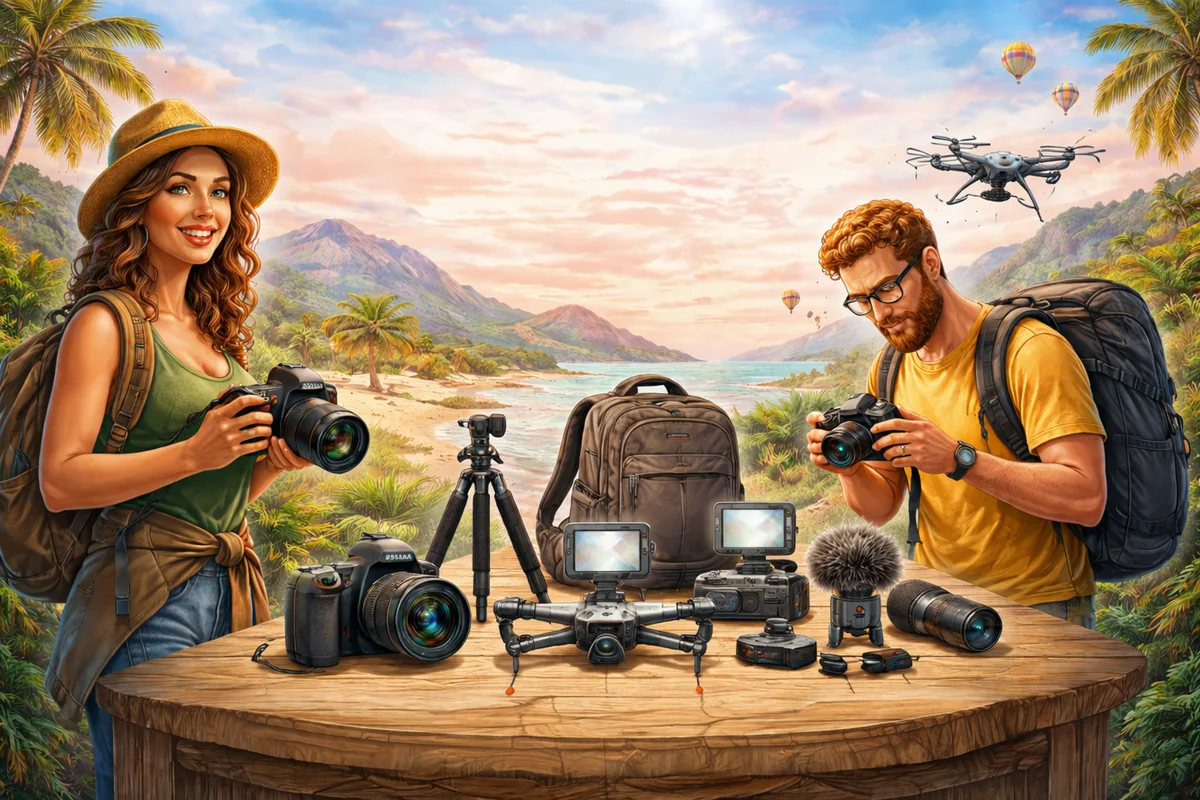
- Mirrorless Cameras: These are the best camera gear for nomads because they offer full-frame sensors in compact bodies. According to the Camera & Imaging Products Association (CIPA) 2025 report, mirrorless shipments now account for over 80% of the interchangeable lens market, proving that the industry has fully pivoted toward portability.
- Smartphones: Never underestimate a flagship phone. For many influencers, a compact camera gear for influencers setup starts and ends with an iPhone or Samsung. They are unbeatable for vertical video and quick social turnarounds.
- Hybrid Setups: Most successful creators use a mirrorless body for “hero” shots and a smartphone for behind-the-scenes content. This allows you to stay agile while maintaining a professional edge.
🔍 Lenses: The “Two-Lens” Rule
It is tempting to pack five lenses “just in case,” but you will likely only use two. Lenses are the heaviest part of travel photography equipment, so choosing wisely is vital.
A versatile zoom (like a 24-70mm) handles 90% of scenarios, from street photography to landscapes. Pair this with one “fast prime” lens (like a 35mm f/1.8) for low-light situations and that creamy background blur.
If you are moving to Thailand or other vibrant locations, having a lens that can handle the transition from bright beaches to dim night markets is essential.
🎙️ Audio and Stabilization: Quality Over Bulk
Good visuals grab attention, but poor audio drives people away.
- Audio: A lightweight vlogging setup for travel must include a dedicated microphone. Small wireless systems like the Rode Wireless series are now industry standards.
- Stabilization: While best travel tripods for content creators are now made of ultra-light carbon fiber, many nomads are moving toward “gorillapod” styles or simply relying on internal body stabilization (IBIS). If you are focused on video, a small gimbal might be worth the space, but only if you shoot daily.
For those just starting to monetize their travels, understanding how digital nomads actually make money often reveals that high-quality audio is more correlated with sponsorships than 8K video resolution.
🔋 Power and Data Management
Running out of battery or storage mid-shoot is a mistake you only make once.
- Spare Batteries: Mirrorless cameras are power-hungry. Always carry at least three.
- External SSDs: These are faster and more rugged than traditional hard drives.
- Power Banks: A high-capacity bank can keep your phone and camera charged during long transit days.
Managing these logistics is part of digital nomad finance 101, as losing footage is effectively losing money.
🎒 Carrying and Protecting Your Kit
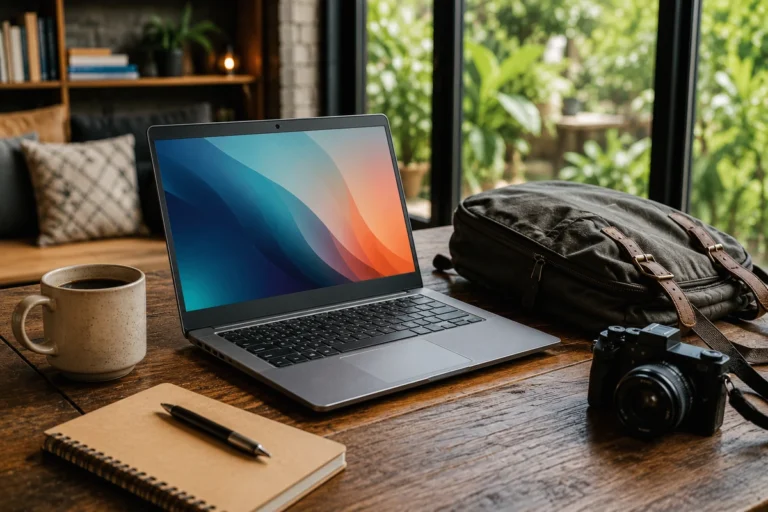
Your bag affects how often you actually reach for your camera. A dedicated camera backpack with side access is usually better than a standard bag with padded inserts.
When you are packing for international shipping or travel, you must decide what stays in your “personal item” and what gets checked. Never check your camera body or glass; if the airline loses your bag, your career goes with it.
For creators traveling with family, the gear list often expands to include more than just cameras. As discussed in how to move your family abroad, balancing professional gear with family essentials requires a highly organized “system” rather than just a bag of loose items.
🖥️ Editing on the Go
Capturing the content is only half the battle. You need a setup that allows for efficient editing without requiring a desktop.
- Laptops: High-performance, thin laptops are the standard. See our guide on the best laptops for remote work to find a screen that is color-accurate enough for professional grading.
- Portable Monitors: These are a game-changer for editing video in small apartments or cafes. Check out the latest portable monitors for digital nomads to double your screen real estate.
🏁 Final Thoughts
Photography gear for nomadic creators should be an investment in your workflow, not a burden on your back. The goal is to reduce the friction between seeing a moment and capturing it. Focus on versatility and reliability over the latest technical specs.
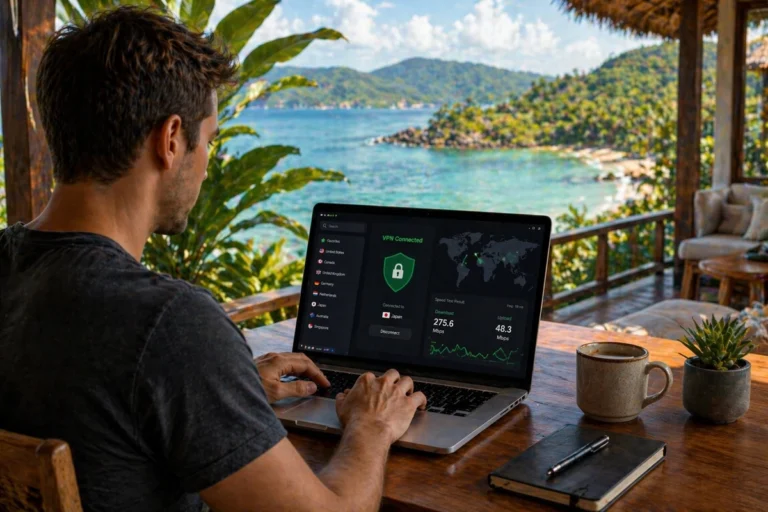
When your gear works seamlessly, you can focus on the story rather than the equipment. Before you set off, ensure your tech is protected; check the best VPN for digital nomads to keep your uploads secure and your intellectual property safe.