🏥Digital Nomad Health Clinics Guide


TLDR
- Beyond Vaccines: Modern travel clinics now offer telemedicine, lab work, prescriptions, and mental health support for long-term travelers.
- Prioritization: Digital nomads should look for clinics with international insurance support, English-speaking staff, and transparent pricing.
- Top Regions: Southeast Asia, Portugal, Spain, Mexico, and Central Europe are the strongest hubs for affordable private healthcare.
- Preventative Care: Pre-travel consultations help avoid costly medical emergencies, especially regarding destination-specific vaccination risks.
- The Strategy: The smartest nomads build a simple healthcare infrastructure before leaving home instead of waiting for a crisis.
One of the least glamorous parts of the digital nomad lifestyle is figuring out what to do when your body suddenly decides to rebel in a foreign country. Nobody posts Instagram stories about food poisoning in Bangkok, stress-induced migraines in Lisbon, or hunting for antibiotics in a city where you barely speak the language. But these things happen constantly once you spend enough time abroad.
The reality is pretty simple: if you travel long-term, healthcare for remote workers stops being an occasional concern and becomes part of your infrastructure. Just like banking, internet, insurance, and accommodation, you need a system. Honestly, once you have a decent structure in place, it becomes far less intimidating than most people expect.
🩺 What Is a Travel or Nomad Health Clinic?
Travel clinics traditionally focused on vaccinations and pre-trip consultations. You would visit before traveling to places with specific health risks, get your shots, receive medication advice, and head off on your trip. That still exists. However, in 2026, many digital nomad health clinics have expanded far beyond that model.
📋 Modern Services Offered by Expat Clinics
- Vaccinations: Destination-specific shots and boosters.
- Diagnostics: Full lab work, blood tests, and imaging.
- Telemedicine: Remote appointments for minor illnesses or mental health.
- Prescriptions: Managing refills for chronic conditions while mobile.
- Specialized Care: Women’s health, physiotherapy, and dental referrals.
In practice, many travelers end up relying on private expat medical clinics guide recommendations rather than local public healthcare systems. It is not because public systems are necessarily bad, but because international clinics are usually easier to navigate quickly when you are unfamiliar with the country.
🛡️ Why Digital Nomads Need a Healthcare Strategy
A surprising number of new nomads assume they will “figure it out later.” That approach works right up until you need medical care urgently. The better approach is building a lightweight healthcare setup before you leave home. This includes ensuring your international health insurance for remote workers is active and understood.
⚙️ The Nomad Healthcare Checklist
- Insurance Network: Verify which clinics accept your specific provider.
- Direct Billing: Identify facilities that bill the insurer directly to avoid cash flow issues.
- English-Speaking Doctors: Use resources to learn how to find an English speaking doctor abroad before an emergency hits.
- Vaccination Status: Ensure all boosters are documented and current.
I have met travelers carrying laptops worth thousands of dollars who had no idea where the nearest international clinic was in the city they were living in. That is more common than you would think.
🌍 The Best Regions for Nomad-Friendly Healthcare
Healthcare quality varies enormously worldwide, but some regions consistently rank at the top of any expat medical clinics guide for quality and cost.
🌏 Southeast Asia
Thailand, Malaysia, Vietnam, and Indonesia remain extremely popular because private healthcare is affordable and accessible. Bangkok has become a global leader in top medical clinics for nomads, with many hospitals catering specifically to foreigners.
In many private clinics here, you can see a doctor within an hour. If you are staying in popular coworking spaces in Southeast Asia, usually a world-class facility is just a short “Grab” ride away.
🇪🇺 Portugal and Spain
Southern Europe is a powerhouse for healthcare for travelers in nomad hubs. Portugal offers high standards in Lisbon and Porto, while Spain is similarly well-equipped. Private appointments are often substantially cheaper than equivalent services in the US. This accessibility is a major factor when nomads perform a best cities for digital nomads cost breakdown.
🇲🇽 Mexico
Mexico has quietly become one of the strongest healthcare destinations for North American nomads. Cities like Mexico City, Guadalajara, and Playa del Carmen have reputable private hospitals. Many US-based travelers are surprised by the quality-to-cost ratio in Mexico’s private sector.
🔍 What to Look for in a Nomad-Friendly Clinic
A beautiful waiting room means very little if the clinic cannot process international insurance claims. When finding healthcare abroad, here is what actually matters for a remote professional:
Transparency is Key: In countries with strong private healthcare competition, clinics often publish consultation prices clearly. This makes budgeting for digital nomads far easier.
- English-Speaking Staff: Crucial for describing symptoms accurately without a barrier.
- Insurance Compatibility: Look for clinics that offer direct billing to avoid foreign transaction fees on large medical bills.
- Laboratory Access: Fast in-house testing for blood work and imaging prevents multiple trips.
- Telemedicine Integration: Many digital health resources for travelers now allow for follow-up appointments via video.
💻 Telemedicine and Digital Health Resources
One of the biggest improvements for nomads has been the rise of telemedicine. You can now handle surprisingly large portions of healthcare remotely. For remote workers constantly moving between countries, this flexibility is incredibly useful. Minor illnesses, prescription renewals, and mental health support can often happen entirely online.
Some top travel credit cards for digital nomads or insurance plans now include telemedicine access as a standard feature. While it is not a replacement for in-person care during serious issues, it dramatically reduces unnecessary clinic visits and keeps your nomad productivity high.
💉 Vaccinations and Preventative Care
A lot of younger travelers ignore travel vaccinations until the last minute. The World Health Organization (WHO) continues to recommend destination-specific vaccination planning depending on current outbreaks and trip duration.
🧬 Common Vaccination Risks
- Hepatitis A & Typhoid: Recommended for many regions with variable water quality.
- Yellow Fever: Mandatory for entry in several African and South American nations.
- Rabies: Essential for long-term stays in regions with high stray animal populations.
- Measles: Boosters are highly emphasized in 2026 due to rising global cases.
Even experienced travelers sometimes skip this step. Digital nomad health clinics can help determine your specific risk profile. Skipping this step is one of the quickest ways to end up needing an emergency fund for nomads for a medical evacuation.
🧠 Mental Health Support Abroad
Long-term travel can be mentally exhausting. Constant movement, unstable routines, loneliness, and work pressure eventually catch up with many people. Fortunately, digital health resources for travelers have improved dramatically in this sector.
Many clinics now partner with online providers for teletherapy. Emotional burnout abroad can become surprisingly isolating if you do not have support systems in place. It is increasingly normal for nomads to maintain regular therapy sessions to stay grounded while managing the stress of solo travel.
🎒 Your Travel Health Kit
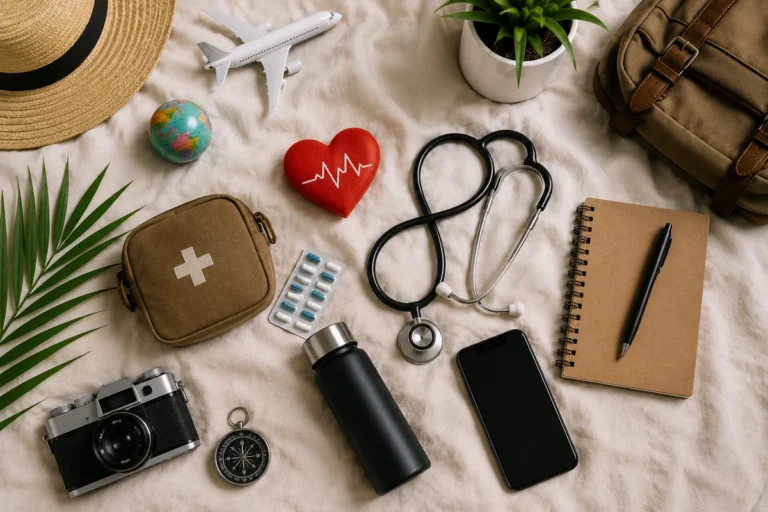
A proper health kit reduces how often you actually need digital nomad health clinics in the first place. The CDC recommends personalized medical kits based on your destination and trip duration.
📦 Basic Nomad Health Kit
- Prescription Backups: At least a 30-day supply and copies of the script.
- Diagnostics: A thermometer and basic first aid items.
- Medications: Pain relievers, anti-diarrheals, and antihistamines.
- Hydration: Oral rehydration salts for food poisoning recovery.
Having these ready in your travel backpack makes a huge difference during long travel days. It allows you to manage minor issues immediately rather than hunting for a pharmacy in a new city at 2 AM.
👋 Conclusion
The digital nomad lifestyle becomes much more sustainable once healthcare for remote workers stops feeling like an afterthought. You do not need an overly complicated system, but you do need a basic structure: reliable insurance, awareness of top medical clinics for nomads, and a solid emergency plan.
This foundation removes an enormous amount of stress. The goal is to build a lifestyle that actually functions well over the long term, including when life becomes inconvenient or unpredictable. By utilizing the right nomad finance tools and health resources, you ensure that a medical “hiccup” remains just a minor footnote in your journey.
Read Also: SafetyWing vs World Nomads: Full Insurance Comparison