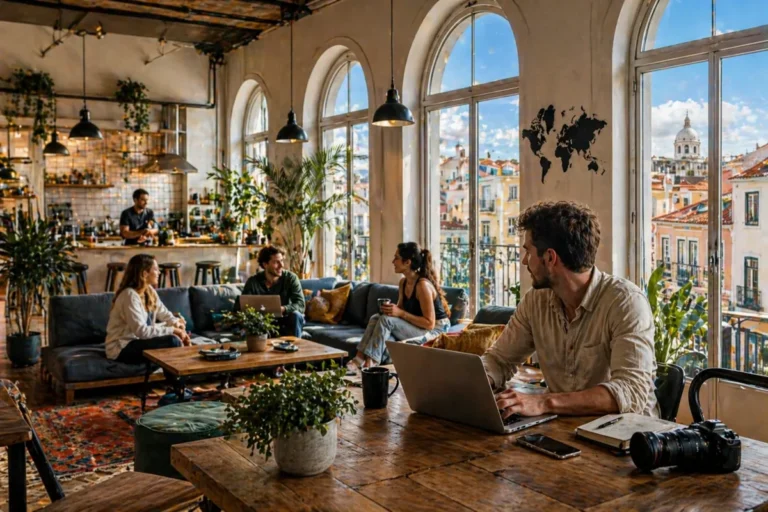
🌍Best Countries With Nomad Visas


TLDR
- Top 2026 Choices: Portugal, Spain, Estonia, and Thailand continue to lead the global landscape as the strongest remote work destinations.
- Beyond the Cost: The ideal framework goes beyond application fees; local taxes, healthcare access, banking networks, and residency paths dictate long-term success.
- The European Shift: Europe remains highly attractive due to robust infrastructure, safety, and internet reliability, though minimum income limits are rising across the board.
- Value Regions: Southeast Asia maintains its dominance by providing unmatched lifestyle-to-cost ratios for independent freelancers and online founders.
- Core Audit: Before applying to any program, travelers must carefully audit income baselines, local fiscal tax traps, health insurance policies, and renewal rules.
A few years ago, “digital nomad visa” sounded like one of those trendy internet phrases that would disappear after a news cycle or two. Instead, it exploded, leading many to search for a definitive digital nomad visa list 2026 to navigate their options.
Governments realized something pretty quickly: remote workers spend money locally, rent apartments long term, use coworking spaces, eat at restaurants on weekdays, and generally contribute to the economy without competing heavily in local job markets.
Now, dozens of countries with remote work visas are actively competing for international talent. Some are excellent. Some look good on paper but become frustrating once you dig into taxes, bureaucracy, or banking restrictions.
After comparing current visa programs, speaking with long-term travelers, and watching how these schemes have evolved over the last few years, a handful of countries consistently stand out for digital nomads who want stability, reasonable costs, and an actual quality lifestyle. If you are looking for the best countries with nomad visas, here are the top options right now.
🇵🇹 Portugal Still Makes Sense for Long-Term Nomads
Portugal has remained near the top of almost every nomad discussion for good reason. Even with rising rents in Lisbon and Porto, the country still offers a strong mix of infrastructure, climate, safety, and accessibility, making it one of the best digital nomad visas in europe.
The Portugal digital nomad visa, commonly referred to as the D8 visa, allows non-EU remote workers to stay legally while earning income from outside Portugal. Applicants need to meet specific digital nomad visa requirements by country, which in Portugal means meeting a monthly income threshold tied to the local minimum wage—a requirement that has increased over time.
What keeps Portugal attractive is not just the visa itself. It is the broader setup around it. You get solid healthcare, reliable public transport, decent banking options, fast internet, and access to the Schengen Area.
For freelancers and online business owners, setting up a stable base is essential, and understanding digital nomad finance 101 how to manage money while traveling becomes much easier in a mature hub.
Lisbon has become noticeably more expensive over the past few years, though. Honestly, some neighborhoods now feel closer to Western European pricing than the “cheap nomad hub” reputation Portugal used to have.
Smaller cities are where things get more interesting. Places like Braga, Aveiro, and Coimbra still offer a calmer lifestyle at significantly lower monthly costs.
- Read More: If you are trying to balance savings and quality of life, checking the comprehensive best cities for digital nomads cost breakdown can help you decide if shifting away from major metropolitan capitals makes financial sense.
🇪🇸 Spain Has Become a Serious Contender
Spain moved aggressively into the digital nomad space with its remote worker visa under the Startup Act, quickly ranking among the top rated countries for nomad visas.
The appeal is pretty obvious once you spend time there. Great weather, strong transport networks, excellent food, modern infrastructure, and large international communities make the adjustment easier than in many countries.
Barcelona and Madrid attract most remote workers initially, but Valencia and Málaga are becoming increasingly popular for people who want slightly lower living costs without sacrificing amenities.
| Spanish Nomad Hub | Main Appeal | Cost Profile |
| Madrid / Barcelona | Massive networking, world-class transit, endless events | High European Costs |
| Valencia / Málaga | Coastal lifestyle, large expat groups, balanced pace | Moderate European Costs |
| Interior Towns | Authentic culture, deep cost savings, peaceful spaces | Low European Costs |
One thing Spain gets right is lifestyle balance. You can realistically finish work, walk outside at 7 PM, and still have an active social environment around you. That sounds minor until you spend months somewhere isolated or poorly connected.
The visa itself requires proof of remote employment or freelance work with companies primarily outside Spain. Applicants also need to meet minimum income requirements and provide health insurance coverage.
To learn more about the formal structural frameworks, you can review the official processing procedures here or consult the consular breakdown of official telework visa requirements.
Taxes are where things become more complicated. Spain offers special tax arrangements in some cases, but the details vary heavily depending on residency status, business structure, and income source.
Navigating a comprehensive digital nomad tax guide regional breakdown is highly recommended, and a proper tax advisor is worth paying for before relocating.
Still, for many nomads wanting a more permanent European base, Spain has become one of the strongest options available, especially for those traveling with dependents who need to figure out how to navigate residency visas for families abroad.
🇪🇪 Estonia Remains One of the Most Efficient Choices
Estonia deserves credit for being early. Long before remote work became mainstream, Estonia was already investing heavily in digital governance, online business systems, and remote-friendly infrastructure.
Its digital nomad visa launched in 2020, and the country still stands out when comparing best digital nomad visas in europe, particularly well suited for freelancers, consultants, developers, and online entrepreneurs.
If you hate paperwork, Estonia is refreshing. Administrative systems are efficient, digital services are excellent, and managing an online business tends to feel less frustrating than in many parts of Europe.
It is the perfect place to focus on your workflow using the ultimate guide best productivity apps for digital nomads.
The climate is the obvious downside. Winter in Tallinn is not exactly tropical coworking territory. Short daylight hours and cold temperatures can become difficult if you are used to Southeast Asia or Southern Europe.
But for focused work periods, Estonia can actually be fantastic. There is less distraction, internet quality is excellent, and the startup ecosystem is genuinely strong.
A lot of nomads describe Estonia as a “productive” destination rather than a vacation-style nomad hub. That distinction matters; not every remote worker wants beach clubs and scooter rentals every weekend.
🇹🇭 Thailand Continues to Dominate on Lifestyle Value
Thailand has technically had remote workers living there for years before governments started using the term “digital nomad.”
Bangkok and Chiang Mai remain two of the largest remote work hubs globally, and new nomad visas for 2026 are making longer stays easier for some travelers, making it one of the easiest nomad visas to get for those who meet the criteria.
Thailand’s appeal has always been simple: your money stretches far without forcing you into uncomfortable living conditions. You can rent a modern condo, eat well daily, and network at the best coworking spaces in southeast asia at a fraction of the cost of major Western cities.
One thing people underestimate about Thailand is convenience. Food delivery works well. Transportation is easy. Mobile data is cheap.
Healthcare quality in major cities is surprisingly strong, though it is always smart to secure international health insurance for remote workers to avoid unexpected out-of-pocket expenses.
The downside? Visa systems in Thailand have historically changed frequently, and navigating long-term legal stays can become confusing if you are constantly doing border runs.
The new nomad visas for 2026 have improved things somewhat, but Thailand still requires more ongoing visa attention than places like Portugal or Estonia.
🇦🇪 Dubai Works for High Earners
Dubai is not for everyone, but for high-income remote workers, it deserves consideration. The UAE’s remote work visa and business-friendly environment appeal heavily to entrepreneurs, consultants, agency owners, and professionals researching how digital nomads actually make money.
The biggest draw is taxation. Depending on your citizenship and financial structure, Dubai can create major optimization opportunities. That alone has pulled thousands of online business owners into the region over the past few years.
Infrastructure is another advantage. Internet speeds are excellent, flights connect globally, and daily logistics are incredibly smooth. You can run an international business from Dubai without many operational headaches.
But the lifestyle costs are real. Housing, nightlife, coworking memberships, and international schooling can become expensive quickly. Dubai only really shines financially if your income comfortably supports the environment.
It is also a very different social atmosphere from places like Portugal or Thailand. Some people love the energy and ambition, while others find it overly commercial after a while.
🇨🇷 Costa Rica Offers a Softer Pace
Costa Rica has become popular among remote workers looking for something slower and more nature-focused.
Its digital nomad visa allows remote workers to stay while earning foreign income, making it a favorite for those looking at the easiest nomad visas to get in the Americas. It continues attracting freelancers who prioritize lifestyle over maximum productivity.
Surf towns, mountain regions, and smaller coastal communities appeal heavily to online workers wanting more outdoor living. When setting up in these beach towns, it is highly recommended to compare connectivity options, such as looking at travel wifi hotspots compared to ensure you can stay online during critical calls.
| Lifestyle Metric | Costa Rica Reality | Southeast Asia Contrast |
| Daily Pacing | Slow, outdoor-focused, tranquil | High-energy, fast-paced, urban |
| Overall Cost | High import duties, Western restaurant prices | Extremely budget-friendly street ecosystems |
| Primary Activity | Surfing, hiking, wildlife observation | Café hopping, networking, night markets |
That said, Costa Rica is not particularly cheap anymore. Compared to Southeast Asia, daily expenses can feel surprisingly high.
Groceries, imported products, and tourist-heavy areas often cost more than new arrivals expect, meaning you will need to rely heavily on the best budgeting apps for digital nomads 2026 guide to track your outlays.
Still, many nomads stay longer than planned because the overall lifestyle feels sustainable. Less rush. More nature. Better weather consistency. Sometimes that matters more than squeezing every dollar.
🔍 What Actually Matters When Choosing a Nomad Visa
The visa itself is only part of the equation. A lot of people obsess over digital nomad visa requirements by country while ignoring the day-to-day realities that determine whether a destination actually works long term.
Even simple things like time zones can impact your quality of life dramatically if your clients or employer operate elsewhere.
I have met travelers who moved somewhere because the visa looked easy, only to leave six months later because the banking system was frustrating or the work schedule became impossible.
That is why finding the best countries with nomad visas depends heavily on your priorities:
- For Savings and Affordability: Southeast Asia still wins for many people.
- For Long-Term European Residency Potential: Portugal and Spain stand out among the top rated countries for nomad visas.
- For Digital Efficiency and Business Infrastructure: Estonia deserves serious attention.
- For Maximum Tax Optimization: Dubai enters the conversation quickly.
🏁 Conclusion
Digital nomad visas are no longer niche experiments. They have become part of how countries compete for skilled remote workers and international income, expanding the global countries with remote work visas network.
But choosing the right destination is less about trends and more about fit. The smartest nomads are not chasing the cheapest country or the most viral destination.
They are looking at sustainability. Can you work effectively there? Save money consistently? Build routines? Access healthcare? Stay legally without constant stress?
That is the real test. A good nomad visa should support your life, not complicate it. And honestly, the best setup is usually the one that lets you stop thinking about visas altogether and focus on building income, structure, and long-term freedom.