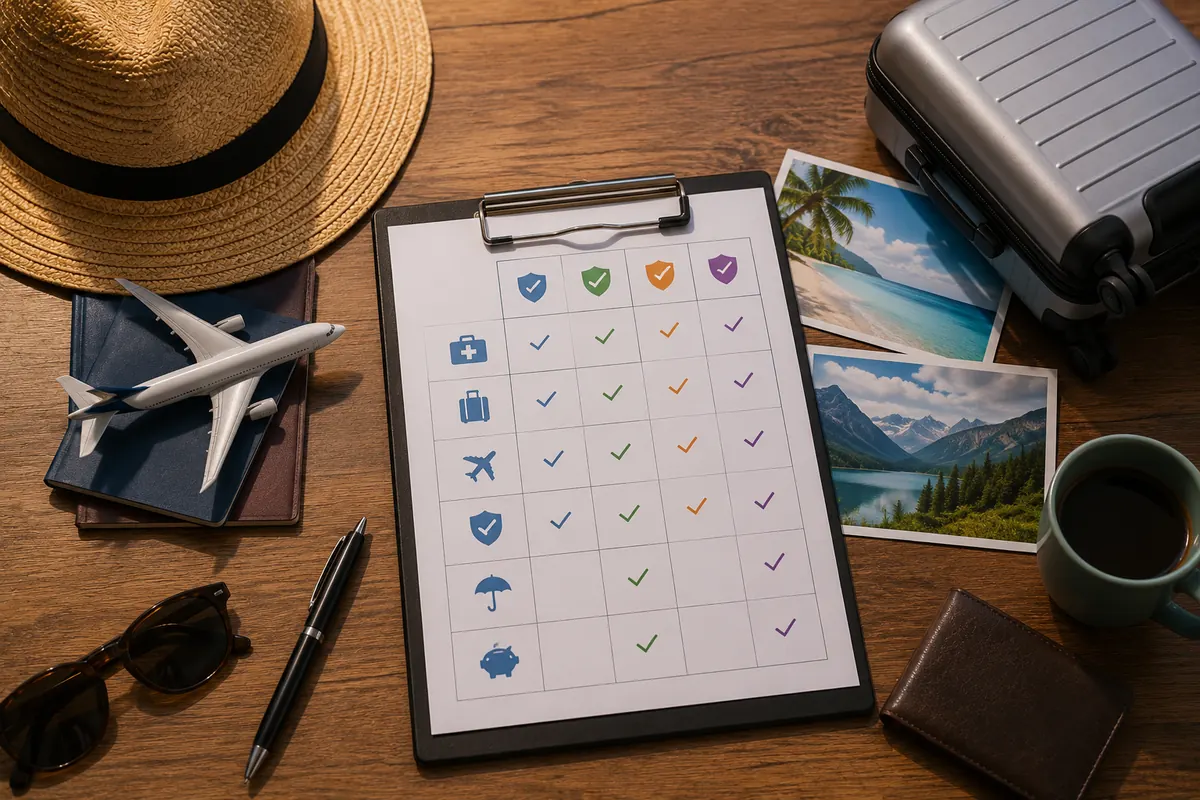
Travel Insurance Mega Comparison Guide

Key Take-Aways
- Travel insurance for nomads typically focuses on medical emergencies and travel disruptions rather than routine care.
- Long-term travellers usually prioritize subscription-based or renewable policies.
- The best choice depends on trip length, destinations, and how often you move between countries.
Travel insurance can feel a bit like one of those things you only think about after you have already booked your flight.
For digital nomads and long-term travellers, though, it quickly becomes an essential part of your monthly lifestyle setup.
It is, broadly speaking, just as vital as setting up your overseas banking or getting your visas and residencies sorted.
The trickiest part of the process is that there is absolutely no single best option on the market.
There are definitely strong providers available, but they are built for entirely different lifestyles.
Some are tailored for constant movement across borders, others for occasional holiday trips, and a few sit somewhere in between.
If you have ever tried comparing them online, you know the policy details blur together incredibly quickly.
In this short guide, I’ll compare the current best travel insurance options for digital nomads. As usual, I’ll try to keep it completely structured, practical, and highly scannable to save you hours of reading.
I can strongly recommend SafetyWing for any digital nomad, because of its perfect blend of international coverage, low costs and flexibility – perfect for us global travelers!

Major Providers Used by Digital Nomads
A few specific companies consistently dominate the remote work space, mainly because they build products around global mobility rather than traditional vacations.
In other words, for people like us, compared to “normies”, because let’s face it, we need different things from our insurance.
Directly comparing top travel insurance providers requires looking at how they handle continuous travel.
- One of the most popular subscription choices is SafetyWing, which offers highly flexible medical coverage designed for multi-country travel. Their rolling monthly plans are highly customizable, and the costs are average to low. It’s been my personal favorite for quite a while.
- Another classic provider is World Nomads, which appeals heavily to adventure travelers who need coverage for specific outdoor sports. They offer customizable activity options, but definitely check first to see which high-risk hobbies are included.
- Traditional corporate insurers like Allianz and IMG represent the third major angle in my ultimate guide to travel insurance. These established giants provide exceptionally high maximum coverage limits and massive claims processing infrastructures.
| Provider Type | Best For | Payment Structure | Flexibility Level |
| SafetyWing | Continuous border hopping and long-term stay | Auto-renews monthly (can cancel at any time) | Exceptionally High |
| World Nomads) | Action sports & gear protection | Fixed upfront per trip | Moderate |
| Allianz / IMG) | High coverage limits | Annual or fixed terms | Low |
Read More: For a detailed breakdown of real-world claim experiences, check out my comprehensive SafetyWing vs World Nomads guide.
Coverage Differences That Actually Matter
When you strip away the clever marketing language, experienced travelers do not choose coverage based on brochures.
We evaluate policies using an objective travel insurance comparison chart built around real-world utility.
- The first critical variable is geographical boundary limitations. Certain budget policies completely exclude specific high-cost healthcare regions unless you pay for premium country add-ons.
- The second factor is duration flexibility. Subscription models allow ongoing coverage without requiring you to constantly reset policies, whereas traditional insurers demand strict start and end dates.
- The third element is the actual claims processing experience. This comes down to documentation requirements, direct hospital billing networks, and how strictly an administrative adjuster interprets standard exclusions.
Finally, you must check activity and gear coverage. If you are traveling with expensive hardware, you might need extra protection alongside specialized international health insurance for remote workers to safeguard your business setup.
Where Nomads Usually Get It Wrong
In my experience, the single most common mistake remote workers make is focusing entirely on finding the absolute lowest monthly price.
Trust me, I’ve been there – cash strapped, and so you take whatever you can get at discount prices … but you might end up paying the price later on.
Cheaper policies look great on paper, but they frequently carry massive deductibles or restrictive hidden exclusions.
Another common pitfall is assuming that global coverage means absolute freedom everywhere, all the time. In reality, most policies enforce strict limits regarding how many days you can spend back in your home country before coverage voids.
Furthermore, people consistently underestimate the sheer volume of paperwork required to get a medical claim successfully approved.
Even the best travel medical insurance can fail to pay out if your initial receipts do not perfectly match corporate requirements.
This is especially true when navigating regional medical systems. For example, understanding the complex healthcare systems in Southeast Asia requires realizing that local hospitals often demand immediate upfront payments before insurance even responds.
- The Home Country Trap: Forgetting that your policy likely stops working when you visit family back home.
- The Deductible Surprise: Realizing too late that you must pay the first few hundred dollars of every medical bill.
- Missing Police Reports: Failing to file a local authority report within twenty-four hours of a theft.
How to Choose the Right Policy for Your Situation
If you are heading out for a short, well-defined vacation, a traditional trip-based policy is usually more than enough.
It keeps things simple, covers your baggage, and is incredibly straightforward to execute.
However, it’s likely that’s not the case when you’re a digital nomad.
If you are moving continuously between continents with no intention of returning home (oh, the sweet freedom!), prioritizing flexibility is the best insurance for long term travelers.
You want a system where you can manage your policy from a phone app while sitting in a foreign cafe. That’s why I prefer SafetyWing!
For those who practice slow travel, a hybrid approach can be highly cost-effective. Many remote workers choose to pair a localized medical plan with a basic nomadic travel policy for short side trips.
No matter your choice, you must ensure your insurance setup integrates cleanly with your broader approach to digital nomad finance seamlessly. Your coverage should protect your wealth, not drain it through administrative chaos.
This is broadly how you can tackle it:
- Step 1: Calculate the exact number of days you plan to be away from your home country this year.
- Step 2: Inventory your electronics to see if you need specialized travel insurance for freelancers regarding gear theft limits.
- Step 3: Check if your destinations require specific entry visas that mandate proof of medical evacuation coverage.
Protecting Your Assets and Emergency Funds
Insurance is ultimately about risk mitigation and protecting your hard-earned capital. If an emergency occurs and your policy fails, your personal savings will take the direct hit.
Every serious traveler needs a financial cushion to cover upfront hospital deposits while insurers process paperwork. It is critical to establish an emergency fund for nomads to handle these exact high-stress situations.
Additionally, keeping your premium payments moving without interruption requires a reliable banking setup. Utilizing the best multi-currency bank accounts for nomads ensures your automated insurance renewals never fail due to a frozen card.
By treating protection as a fixed business cost, you secure your ability to explore the world long-term. It allows you to focus on your work without worrying about local medical inflation.
Final Thoughts
In summation, travel insurance is definitely not something you can just set and forget, especially when your lifestyle involves regular border crossings.
It functions best when it is perfectly aligned with how you actually move, rather than how traditional tourism packages assume you travel.
There is no universal winner in the global marketplace. There are only better structural fits depending on whether you are staying put, traveling slowly, or constantly shifting between time zones.
I can strongly recommend SafetyWing for any digital nomad, because of its perfect blend of international coverage, low costs and flexibility – perfect for us global travelers!