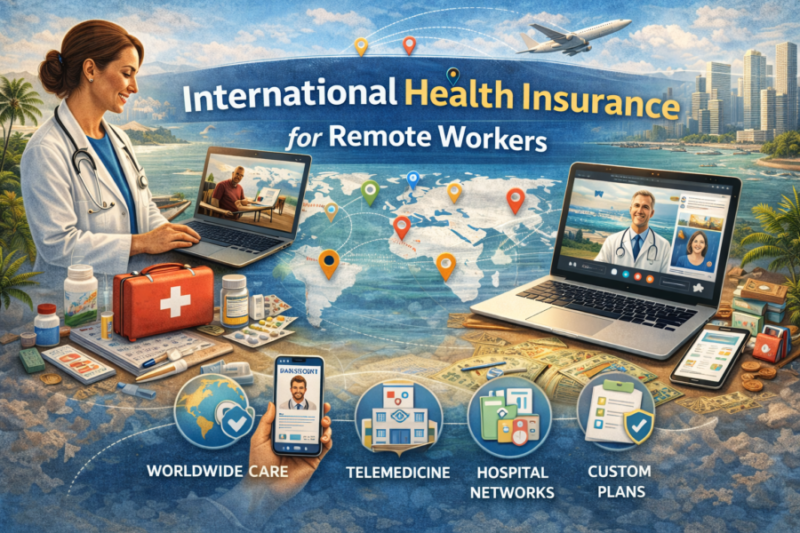
International Health Insurance for Remote Workers
TLDR
- International health insurance is essential for remote workers because travel or long-term stays abroad are not reliably covered by standard local plans.
- Plans vary widely in what they cover, from emergencies and evacuations to routine care, dental, and mental health support.
- Popular global options include flexible nomad-focused plans and fully comprehensive expat medical policies, each suited to different needs and budgets.
- Emergency medical evacuation and repatriation are critical components to look for in any international health plan.
- Visa, residency, and cost differences influence what kind of insurance you need, so choosing the right level of coverage requires careful comparison.
When you choose a remote lifestyle, like working from Bali one month and Lisbon the next, you quickly realize that regular insurance from your home country often doesn’t travel with you. Healthcare systems vary dramatically from place to place.
In some countries, public care is excellent and widely accessible. In others, private clinics dominate and medical costs can be shockingly high if you’re paying out of pocket.
For remote workers, especially those living abroad or travelling frequently, international health insurance isn’t just a nicety. It’s a financial safety net that protects you from crippling medical bills and gives you access to reliable care wherever you find yourself.
Why Remote Workers Need International Health Insurance
Traditional health insurance usually ties you to one country’s healthcare system. That can leave you exposed when you cross borders, because many local plans offer limited or no coverage abroad. International health insurance is designed to fill that gap.
It provides global coverage, letting you see doctors or specialists in multiple countries without needing a separate plan in each place. This is particularly useful if you’re nomading long-term or intend to spend extended periods outside your home country.
One of the most important features of global plans is emergency medical evacuation. Suppose you’re in a remote region without access to quality care. In that situation, evacuation coverage can cover the cost of transporting you to a hospital that can provide proper treatment.
Without this, evacuation costs alone can run into the tens of thousands of dollars, depending on where you are. When thinking about coverage, keep in mind that global health insurance often includes care for accidents, emergencies, hospital stays, and sometimes even routine doctor visits.
Types of Plans Available
International health insurance plans fall into a few broad categories, each suited to different kinds of remote lifestyles:
Nomad-Focused Flexible Plans
For people who are constantly on the move, flexible plans that mirror travel subscription models are common. These operate on a monthly basis and often include emergency medical coverage, hospitalization support, and evacuation services.
You can typically adjust or cancel coverage as your travel plans change, making them ideal for nomads who don’t want long-term contracts.
Comprehensive Expat Medical Plans
If you’re planning to stay in a region for an extended time – say, living in Portugal on a digital nomad visa – a full expat medical plan may suit you better.
These tend to be more expensive but offer broader benefits, including routine doctor visits, preventive care, maternity services, mental health support, and extensive hospital coverage.
They’re designed to function like robust local health plans but with portability across countries.
Local Plus Emergency Coverage
Some remote workers combine a basic international plan that covers emergencies with a local insurance policy in the country where they’re temporarily residing.
This hybrid approach can work well in places with strong public healthcare but may require more administrative effort. In this setup, the international policy handles catastrophe scenarios, while the local plan covers everyday care.
What Coverage Should You Look For?
Medical coverage can vary widely between plans, so knowing what you need is important. At a minimum, most health-focused international plans include:
- Emergency medical treatment for sudden illness or injury abroad.
- Hospitalization for inpatient stays and surgical procedures.
- Emergency evacuation if local facilities are insufficient.
- Repatriation to your home country or another approved destination for treatment or recovery.
Beyond these basics, some plans offer additional benefits such as routine outpatient care, dental and vision coverage, maternity services, mental health support, and prescription medications.
These add-ons can be very beneficial, especially if you plan to stay in one place long enough to need regular care.
When reviewing plans, pay special attention to annual limits and exclusions. Some providers have high maximums for treatment costs, while others restrict coverage in certain countries or for specific conditions.
Understanding what is and isn’t covered – such as pre-existing conditions, chronic disease management, or maternity services – ensures you won’t be surprised by limitations later.
Cost and Visa Considerations
Insurance costs depend on the type of plan you choose, your age, and where you plan to live or travel. For example, in many Middle Eastern countries like the United Arab Emirates, proof of health insurance is required to secure a residence visa.
In other regions, having international coverage may not be mandatory but is strongly advised because of high private healthcare costs.
Premiums for robust global health insurance plans can range significantly. Some nomad-friendly options operate on subscription models with relatively affordable monthly fees.
Others – especially those offering comprehensive expat care – charge higher annual premiums in exchange for broader coverage, lower deductibles, and higher treatment limits.
Remote workers who plan to stay in one place for a year or longer should consider whether a more extensive plan makes financial sense, especially if they are supporting dependents or have ongoing medical needs.
Examples of Coverage Features
Different insurers emphasize different aspects of care. Some global plans include telehealth services that let you consult with medical professionals online, which can be very useful if you’re in a region where language barriers or travel distances make in-person visits inconvenient.
Other plans include mental health support or preventive care, which can be valuable for long-term wellbeing while living abroad.
Other policies focus on high coverage limits and direct billing with global hospital networks, meaning you won’t have to pay out of pocket in many cases – the provider bills the clinic or hospital directly.
This is a huge convenience for nomads, as navigating foreign billing systems and then waiting for reimbursement can be stressful and slow.
Common Exclusions to Understand
It’s equally important to understand what international health insurance does not cover. Many policies exclude pre-existing conditions unless you meet certain underwriting requirements.
Preventive care, cosmetic procedures, and alternative therapies like acupuncture may also be excluded or require special riders. Additionally, maternity coverage and routine dental or vision care are often not included in basic plans and may require additional modules for full coverage.
Knowing these caveats ahead of time helps you make an informed decision and avoid surprise costs.
Real-World Perspective from Nomads
From my own experience and conversations with friends who live a truly nomadic life, insurance becomes one of those things you really appreciate when you need it. In one incident, a friend suffered a broken leg while living in Japan.
The local public system was overwhelmed, and the international plan covered both emergency care and evacuation to a facility equipped to handle the injury properly. Without that coverage, the cost would have easily exceeded several thousand dollars.
Another colleague opted for a more comprehensive expat plan when she moved to Europe on a long-stay visa. It gave her not only hospital and emergency coverage but also access to routine doctor visits and mental health services, which made adapting to life abroad a smoother experience overall.
These stories highlight the practical differences between basic travel insurance and international health insurance built for long-term remote living.
Conclusion
International health insurance is one of the most important pieces of your remote work financial infrastructure. It protects you from financial risk, provides access to care when you need it most, and gives you peace of mind as you build a location-independent life.
The right plan depends on how you travel, where you stay, and what types of coverage matter most to you.
Some nomads start with more flexible, adventure-oriented plans and graduate to comprehensive expat plans as their lifestyle stabilizes. Others choose broad coverage from the outset because it suits their risk tolerance and travel patterns.
Whatever path you choose, understanding the differences in coverage, costs, and benefits allows you to make an informed decision that supports both your health and your financial freedom.
Blog
-
Freelancing vs Remote Job: What’s Better for Nomads?
If you want to live and work from anywhere, do you build a freelance career, or do you land a remote job?
-
Top Travel Credit Cards for Digital Nomads
If you travel regularly while earning remotely, the right credit card is one of your most useful financial tools.
