🏦How to Open Offshore Bank Accounts as a Nomad

TLDR
- Legal Compliance: Offshore banking is legal for digital nomads when properly declared and used for legitimate financial management.
- Global Transparency: Modern offshore accounts are no longer “secret” due to global reporting systems like CRS and FATCA.
- Top Jurisdictions: The best offshore banking jurisdictions for nomads combine stability, multi-currency support, and practical remote onboarding.
- Stricter Rules: Banks now require proof of income, tax residency info, identity verification, and thorough compliance documentation.
- Financial Tool: Nomad offshore banking works best as part of a broader international financial setup, not as a shortcut for tax evasion.
At some point, most long-term travelers and digital nomads run into the same frustrating problem. Your money is in one country. Your clients are in another. Your expenses are spread across three more. Then suddenly your domestic bank blocks your card because you bought coffee in Vietnam five minutes after withdrawing cash in Spain.
Fun times.
That’s usually when people start looking at how to open offshore bank account options. The phrase itself sounds dramatic, mostly because movies have spent decades turning offshore accounts into something mysterious. In reality, offshore banking for nomads is often just practical financial organization for people living internationally.
If you travel constantly or how digital nomads actually make money involves diverse international clients, having banking options outside your home country can genuinely simplify your life.
🌍 Why Nomads Go Offshore
- Diversification: Protect against domestic bank failures or currency devaluations.
- Multi-Currency: Hold USD, EUR, SGD, and others in one place to avoiding foreign transaction fees while traveling.
- Functionality: Better wires and support for international business entities.
📑 What Is an Offshore Bank Account?
An offshore bank account is simply a bank account opened outside your country of residence or citizenship. That’s it. If you’re German and open a bank account in Singapore, that’s offshore banking. If you’re American and bank in Switzerland, same thing.
For travelers, an international offshore banking guide isn’t about hiding wealth; it’s about accessibility. These accounts function like any regular bank account: you can hold money, send transfers, use debit cards, and receive payments.
🛠️ Common Functional Uses
| Use Case | Benefit for Nomads |
| Client Payments | Receive funds in the same currency as the payer to save on FX. |
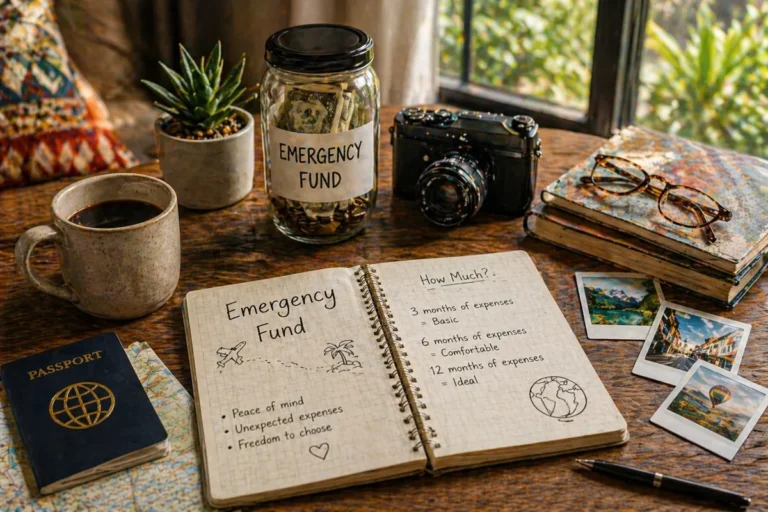
| Emergency Fund | Keeping an emergency fund for nomads in a stable jurisdiction. |
| Travel Logistics | Using specific top travel credit cards for digital nomads linked to international accounts. |
🕵️ Offshore Banking Is Not Anonymous Anymore
This part is important. The “secret Swiss account” idea is largely outdated. Global reporting systems like CRS (Common Reporting Standard) now require financial institutions to exchange account info with tax authorities. For US citizens, FATCA requirements make reporting mandatory regardless of where you live.
Good nomad offshore banking 2026 is about financial diversification, not hiding money. Legitimate compliance matters now. This is part of the broader digital nomad finance 101 curriculum that every traveler should learn.
🗺️ Best Countries for Offshore Banking as a Nomad
Not all jurisdictions are equally useful for travelers. Some countries are excellent for corporate banking but terrible for personal accounts. When opening an offshore account as a traveler, you want to balance stability with remote accessibility.
🇸🇬 Singapore
Singapore remains one of the strongest banking hubs in the world. It is politically stable and highly respected. However, compliance is strict. Some institutions prefer higher balances, but for serious best offshore banks for digital nomads, it remains a top-tier choice.
🇦🇪 United Arab Emirates
The UAE has become increasingly popular with digital entrepreneurs. Dubai, in particular, offers a strong expat ecosystem and multi-currency support. Many nomads eventually combine UAE residency with local banking to manage their top remote job boards for digital nomads income.
🇬🇪 Georgia
Georgia has quietly become popular because the banking system is relatively foreigner-friendly. Onboarding is often easier than in Western Europe, and you can sometimes complete the process quickly. It’s a great example of how to open a bank account in another country without the multi-month headache found in EU nations.
🇨🇭 Switzerland
Still the king of stability. While onboarding standards are high and minimum deposits can be substantial, Swiss banks offer excellent wealth management. This is often the second step in a nomad retirement planning guide once your assets grow.
📁 What Documents Do You Need?
Opening offshore accounts today involves serious compliance checks. Banks are extremely cautious because anti-money laundering regulations have tightened globally. If you are freelancing vs remote job based, have your contracts ready.
📋 Standard Document Checklist
- Valid Passport: Sometimes requires a certified or apostilled copy.
- Proof of Address: A utility bill or bank statement (can be tricky for full-time nomads).
- Tax Identification Number: Essential for CRS reporting.
- Source of Wealth: Proof of where your money comes from (contracts, salary slips).
- Reference Letters: Some banks still ask for a reference from your current bank.
🏢 Personal Accounts vs Business Accounts
Many nomads eventually need both. Personal accounts are easier to manage and work well for daily spending or using best budgeting apps for digital nomads.
Business accounts are significantly more complex. If you are opening an offshore account as a traveler for your LLC or Ltd, expect a deep dive into your business activity, client invoices, and incorporation documents. In many ways, keeping your business banking separate is a key part of your digital nomad tax guide.
⚠️ Common Mistakes Nomads Make
The biggest mistake is assuming offshore banking automatically means lower taxes. It does not. Your tax obligations typically depend on your residency and local laws. Offshore bank accounts for tax planning are legitimate, but they are not a “get out of tax free” card.
Another mistake is neglecting the security of your connection. You should always use a best vpn for digital nomads when accessing any international bank account to ensure your credentials aren’t intercepted on public Wi-Fi. You can find more info on banking in other countries here.
💡 Practical Red Flags
- Chasing “zero-reporting” jurisdictions (they usually don’t exist anymore).
- Using a bank with no mobile app (unusable for nomads).
- Failing to update your address/residency with the bank.
📱 Fintechs Are Not Always Real Offshore Banking
Apps like Wise, Revolut, and Payoneer are incredibly useful, and I recommend them for best multi-currency bank accounts for nomads. However, they are not always a direct substitute for a full-scale open offshore bank account relationship.
Some fintechs operate as electronic money institutions rather than traditional banks. For long-term wealth diversification or high-value business treasury management, many nomads combine fintech tools for daily use with actual international bank accounts for their main savings.
👋 Final Thoughts
Offshore banking as a nomad is far less glamorous than the internet makes it sound. Mostly, it’s paperwork. But nomad offshore banking 2026 is genuinely useful once your life becomes international enough that traditional domestic banking stops fitting properly.
Approaching the process realistically is the key. Approach it as a way to build financial resilience and currency flexibility. Before you head off to the cheapest digital nomad destinations, ensure your banking is as mobile as you are. Keep it boring, keep it organized, and keep it fully compliant.