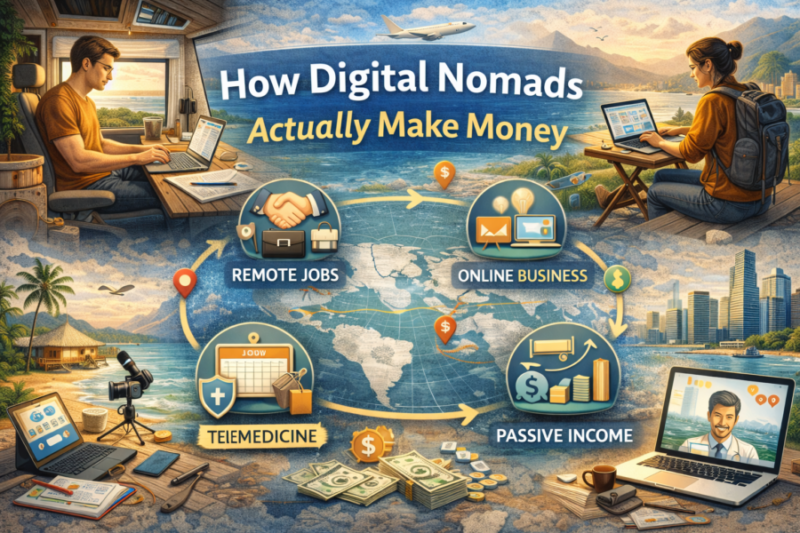
How Digital Nomads Actually Make Money
TLDR
- Digital nomads earn income through a variety of remote employment models, including full- and part-time remote jobs with companies.
- Freelancing and contract work across skills like writing, design, programming, and consulting remain core income sources.
- Running online businesses, e-commerce, digital products, and passive revenue streams are significant for many nomads.
- Content creation and the creator economy, including sponsorships and memberships, are growing income sources.
- Income levels vary widely, with many nomads earning mid-range salaries and others building multi-stream setups that exceed six figures.
One of the first things people want to know about the digital nomad lifestyle is this: how do you actually make money while traveling and working remotely?
It’s a question I’ve asked myself too, especially during those first few months living abroad and figuring out how to pay rent in one place while earning money from clients in another.
The truth is, there isn’t just one way nomads make money. There’s a whole ecosystem of income streams that support this lifestyle, and most nomads combine several of them to build sustainable, location-independent careers.
The data on income and work types shows a clear pattern: remote work isn’t a fringe concept anymore. It’s a broad umbrella that includes salaried roles, freelance gigs, entrepreneurial ventures, and creative businesses.
Full-Time Remote Employment
One of the most stable ways digital nomads make money is by working directly for a company that allows remote work.
These roles are functionally similar to traditional office jobs, except your office could be a beachside coworking space or a café in Lisbon. According to recent data, about 61 percent of digital nomads are employed full-time or part-time in remote roles.
Remote employment covers a wide range of work: tech jobs like software engineering and data analysis, creative roles like UX design and writing (basically irrelevant now because of AI), and specialist positions like project management and customer success.
Some of these remote roles pay salaries that rival office-based positions. For example, data scientists who work remotely can command substantial earnings based on analysis of remote job listings.
For many nomads, remote employment provides benefits like predictable paychecks, company-sponsored tools, and sometimes health insurance or retirement contributions.
The downside is that it may mean less flexibility in choosing where you work from and how you manage your schedule. Still, it’s a strong foundation for those who value stability, and it’s how I started too.
Freelancing and Contract Work
Freelancing is perhaps the most classic digital nomad work model. In this setup, individuals offer their professional skills directly to clients, often on a project-by-project basis.
Skills that are/were in high demand include copywriting, graphic and web design, programming, marketing, and social media management (again, due to AI, many of these aren’t viable anymore … to my own regret).
The appeal of freelancing is control. You choose your clients, set your rates, and often dictate your own hours. Work can come through platforms and marketplaces, direct outreach to clients, or professional networking.
Earnings can vary widely – seasoned freelancers in tech or marketing niches can charge premium rates, while newer freelancers might start with lower fees as they build their reputations.
For many nomads, freelancing isn’t just a job. It’s a platform for building business relationships across industries and geographies, which often leads to repeat work and referrals.
Freelancing also scales well; you can take on as much work as you’re comfortable with or consolidate long-term contracts that provide regular income.
Online Businesses and Passive Income Streams
Beyond direct work for clients or employers, many nomads build income streams that aren’t tied to hourly labor. This can include running an online business, selling digital products, or tapping into passive income models. Common approaches include e-commerce stores, print-on-demand products, affiliate marketing, membership sites, and digital courses.
These types of income streams often require more upfront effort and marketing, but over time they can become relatively hands-off.
For example, a nomad might create a line of online courses teaching skills like photography or web design, and then earn money from those courses long after the initial work is published. Similarly, an e-commerce storefront can generate ongoing revenue without constant client work.
Many remote workers diversify their income in this way precisely to avoid dependency on one job or client. Multiple streams can cushion against slow periods or market downturns and help nomads invest and save more effectively while travelling.
The Creator Economy
Another revenue avenue that has grown rapidly is content creation. Platforms like YouTube, Instagram, TikTok, and Substack enable creators to monetize their audience through ad revenue, sponsorships, affiliate deals, and paid subscriptions.
For nomads with a flair for storytelling or creative skills, this model can blend lifestyle and income. A travel vlogger, for instance, might earn sponsorship money from brands, ad revenue from video platforms, and affiliate commissions from equipment recommendations. Writers who build email newsletters can earn through paid membership tiers.
While content creation often takes time to gain traction and requires consistent effort, it can become a meaningful component of a diversified income portfolio – especially for nomads who enjoy building community and a personal brand.
Common Gig and Micro Work
Many nomads supplement their income with small, on-demand tasks or gig work that can be completed remotely. This is part of the broader gig economy, which includes short-term employment opportunities facilitated by digital platforms.
Examples include virtual assistance, microtasks, remote customer service roles, or quick content projects. These gigs tend not to pay as much as specialized freelance or salaried work, but they can provide steady cash flow when larger jobs are slow or during transitions between projects.
Even though gig work is often supplemental rather than a primary income source, it reflects the flexibility inherent in the nomad lifestyle. You can take on quick tasks, pause, and then pivot back to larger contracts without being tied to a specific location.
Income Variation and Nomad Reality
Across all these income methods, earnings vary widely. Surveys and research indicate that many nomads earn healthy incomes comparable to office-based professionals, while others – especially early in their journey – earn more modest sums.
For example, data shows that a significant share of nomads report yearly incomes in ranges similar to or higher than typical remote workers, while others earn less, depending on experience and skills.
This diversity reflects the range of work models digital nomads adopt: some are career remote employees, others are freelancers building client bases, and still others are entrepreneurs with scalable businesses. Flexible combinations of these approaches help nomads build financial stability while living abroad.
From my own experience, having multiple income streams and knowing how to manage money made a huge difference in my early years on the road. A mix of remote contract work and passive digital products helped me cover rent in low-cost destinations without feeling stressed during slower months.
Conclusion
Digital nomads make money in many creative and structured ways. Remote employment provides predictable income and stability. Freelancing lets you control your work and rates.
Online businesses and passive streams open doors to scalable revenue. Content creation taps into audience monetization. And gig or micro tasks fill gaps when needed.
All of these methods reflect a broader shift in how people work in a digital age: location no longer has to dictate income, as long as you have a good laptop. Instead, skills, adaptability, and strategic diversification determine how much and how consistently nomads earn.
I’ve pulled a six-figure income with freelancing, but that was before AI made a few of my skills basically worthless, so it’s important to stay flexible and never rely on one thing.
By understanding the full spectrum of income streams and aligning them with your work style, you can build a sustainable financial base that supports both your lifestyle and long-term goals.
Blog
-
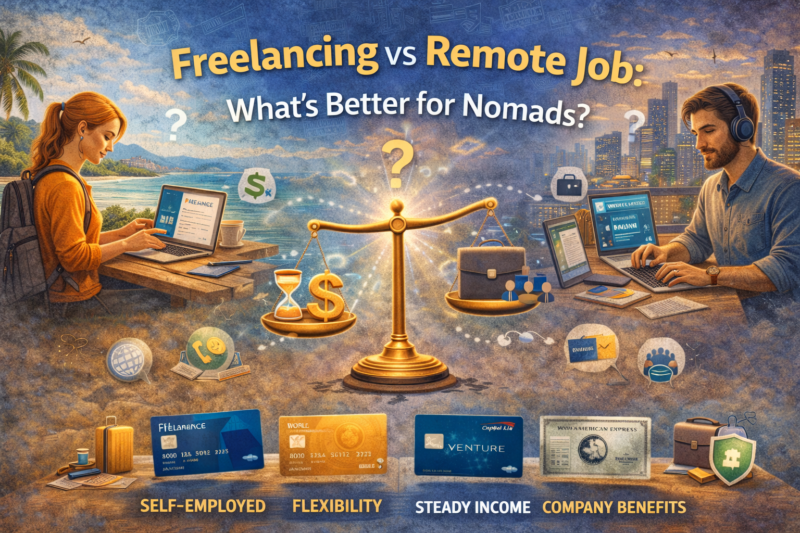
Freelancing vs Remote Job: What’s Better for Nomads?
If you want to live and work from anywhere, do you build a freelance career, or do you land a remote job?
-
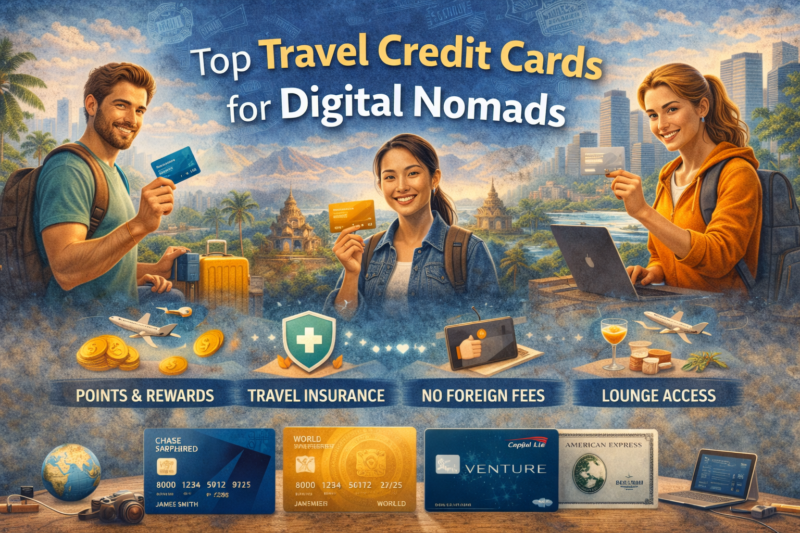
Top Travel Credit Cards for Digital Nomads
If you travel regularly while earning remotely, the right credit card is one of your most useful financial tools.
