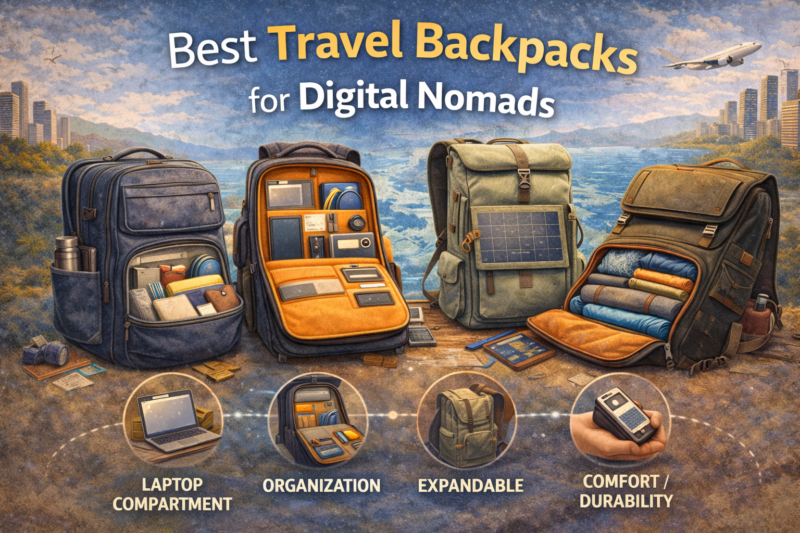
Best Travel Backpacks for Digital Nomads
TLDR
- The best travel backpacks for digital nomads balance carry on size, tech protection, and long term comfort.
- Backpacks around 30L to 40L tend to offer the best mix of mobility and packing capacity.
- Good nomad backpacks include dedicated laptop compartments, durable materials, and strong internal organization.
- Models designed for travel often open suitcase style, making packing easier for long trips.
- Popular options among digital nomads include the Osprey Farpoint 40, Nomatic Navigator, Peak Design Travel Backpack, Tortuga Travel Backpack, and Bellroy Transit Backpack.
Ask ten digital nomads what their most important piece of gear is and you will probably hear the same answer more than once.
The backpack.
For many remote workers who move between countries, the backpack becomes a portable office, a wardrobe, and sometimes even a home base between destinations. It carries laptops, chargers, documents, and everything else you rely on to keep earning while traveling.
That makes choosing the right backpack more important than most people realize. A poorly designed bag can make airport days exhausting. A well designed one makes moving across continents surprisingly smooth.
Over the years I have learned that the best travel backpacks for digital nomads share a few key traits. They stay within airline carry on limits, protect tech gear properly, and remain comfortable when fully packed.
Let’s look at what makes a great nomad backpack and some of the most reliable options currently used by remote professionals.
What Digital Nomads Should Look For in a Backpack
Before diving into specific models, it helps to understand what actually matters in a travel backpack.
Capacity is one of the first considerations. Most experienced nomads prefer bags between 30 and 40 liters. This size is large enough to carry clothes and electronics, yet small enough to qualify as carry-on luggage for many airlines.
Laptop protection is equally important. Dedicated padded sleeves keep devices secure during transit, and many modern travel backpacks are designed specifically for laptops up to 16 or 17 inches.
Durability also matters more than people expect. Nomad backpacks are dragged through airports, buses, and taxis across dozens of countries. Strong fabrics and reliable zippers can extend the lifespan of a bag dramatically.
Comfort is the final factor that separates good bags from great ones. Adjustable straps, breathable back panels, and supportive hip belts help distribute weight properly during long travel days.
Once you start paying attention to these details, certain backpacks stand out quickly.
Osprey Farpoint 40
The Osprey Farpoint 40 has become something of a classic among long term travelers.
One reason is its size. At around 40 liters, it fits within many airline carry on limits while still offering enough room for clothing, tech gear, and essentials. For nomads trying to avoid checked baggage, that balance is extremely useful.
The bag opens from the front rather than the top, which means it packs more like a suitcase. That small design decision makes organizing clothing much easier during extended trips.
Comfort is another strong point. The Farpoint series includes a supportive harness system, adjustable straps, and a breathable back panel that helps distribute weight evenly. For people who walk long distances between transport hubs and accommodation, that comfort matters.
It also includes a dedicated laptop sleeve and several internal compression straps that keep gear stable while moving.
Nomatic Navigator Backpack
The Nomatic Navigator Backpack is designed with tech heavy travelers in mind.
Many digital nomads carry more electronics and gadgets than the average traveler. Laptops, tablets, external drives, cameras, cables, and chargers can quickly become difficult to organize.
The Navigator addresses this with a highly structured interior that separates devices into dedicated compartments. This layout makes it easy to access equipment quickly without unpacking the entire bag.
Another interesting feature is expandability. The backpack can expand from a smaller everyday carry size to a larger travel capacity, which allows you to adapt the bag depending on the situation.
Water resistant materials and hidden compartments also add extra protection when navigating crowded cities or unpredictable weather.
For remote professionals who treat their backpack as a mobile office, this level of organization can be incredibly practical.
Peak Design Travel Backpack
Peak Design is well known for producing gear aimed at photographers and creators, and their travel backpack reflects that background.
The Peak Design Travel Backpack focuses heavily on modular organization. Interior compartments can be adjusted depending on whether you are carrying camera equipment, laptops, or general travel gear.
Weather resistant materials help protect electronics from rain and moisture, which is important when moving between climates. Many versions also include multiple access points, allowing you to open the bag from different sides rather than unpacking everything from the top.
Another practical feature is its expandable capacity. Some models can expand to around 45 liters, which allows travelers to carry more gear when needed while compressing the bag for smaller loads.
For content creators, photographers, or video editors working remotely, this flexibility is often a major advantage.
Tortuga Travel Backpack
The Tortuga Travel Backpack was designed specifically with digital nomads and remote workers in mind.
One of its defining features is its suitcase style opening. Like the Osprey Farpoint, the bag opens flat, allowing travelers to organize clothing and gear more efficiently than traditional top loading backpacks.
Inside, the Tortuga backpack includes several compartments designed for electronics. Laptop sleeves, tablet pockets, and cable storage sections help keep tech gear organized during transit.
The structure of the bag also helps distribute weight more evenly across the hips and shoulders. That reduces strain when carrying heavier loads through airports or across cities.
For nomads who travel frequently between destinations, that ergonomic support can make a noticeable difference.
Bellroy Transit Backpack
Not every digital nomad needs a large travel pack.
Some prefer a lighter setup with a suitcase or rolling luggage for clothes and a smaller backpack for work gear. That is where bags like the Bellroy Transit Backpack come in.
This backpack focuses on everyday carry rather than full travel capacity. It offers enough space for a laptop, documents, headphones, and daily essentials without becoming bulky.
The design is intentionally minimal and professional. That makes it suitable for coworking spaces, meetings, or working from cafés.
Hidden pockets, water resistant fabric, and thoughtful internal organization make it a strong option for remote professionals who prioritize mobility and style.
Practical Packing Tips for Nomads
Even the best backpack works better when packed properly.
Using packing cubes helps separate clothing from electronics and keeps everything easier to access. Compression cubes can also reduce the amount of space clothing takes up.
Tech gear benefits from dedicated pouches. Cables, adapters, and external drives quickly become tangled if stored loosely inside the bag.
Another helpful habit is keeping important documents and devices in easily accessible pockets. Airports and security checkpoints become far less stressful when passports and laptops can be retrieved quickly.
Over time, most nomads learn that packing lighter almost always improves the travel experience.
Conclusion
For digital nomads, a backpack is more than just luggage. It is a mobile workspace and a travel companion that moves across continents with you.
The best backpacks combine durability, comfort, and thoughtful organization. They protect valuable electronics, remain comfortable during long travel days, and stay within airline carry on limits.
Backpacks like the Osprey Farpoint 40, Nomatic Navigator, Peak Design Travel Backpack, Tortuga Travel Backpack, and Bellroy Transit Backpack have become popular for exactly those reasons.
Ultimately, the perfect backpack depends on how you travel. Some nomads prioritize maximum capacity. Others prefer smaller setups focused on mobility.
What matters most is choosing gear that supports your lifestyle rather than slowing you down.
Because when your entire office fits comfortably on your back, the world becomes a much easier place to explore.