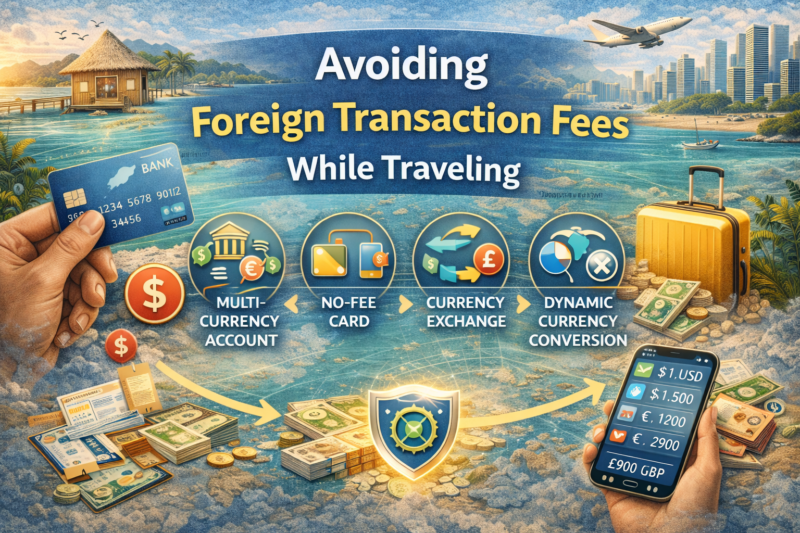
Avoiding Foreign Transaction Fees While Traveling
TLDR
- Choosing payment cards that do not charge foreign transaction fees is one of the most effective ways to lower travel costs.
- Declining dynamic currency conversion and always paying in the local currency can reduce hidden markups on purchases.
- Using ATM networks wisely and selecting accounts that refund international ATM fees helps you avoid unnecessary charges.
- Planning ahead by exchanging money through favorable channels before departure can improve your spending power abroad.
- Understanding and comparing fees and policies on credit, debit, and prepaid travel options goes a long way toward smarter money management on the road.
If you’ve ever returned from a trip and seen extra charges on your statement after paying for coffee, dinner, or transit abroad, you’re not alone. Those unwanted costs are often foreign transaction fees or exchange markups, and they quietly add up with every purchase you make using a card from your home country.
These fees can be small on a single purchase, but over time they chip away at your travel budget in a way most people don’t anticipate.
As someone who’s spent years living and working in different countries, I learned early on that understanding how these fees work and how to avoid them is one of the best confidence boosters you can get before any long trip.
With a few thoughtful habits and the right financial tools, you can keep more of your money in your pocket and enjoy your travels without surprise charges.
What Foreign Transaction Fees Are and Why They Matter
When you use a credit or debit card abroad, many banks will add a fee to your purchase simply because the transaction was in a foreign currency. These fees commonly range from around one percent to three percent of each transaction’s value.
Over the course of a week of daily spending, that might seem small, but it quickly adds up, especially if you’re buying meals, transport, gear, or accommodations.
There’s also something called dynamic currency conversion, which happens when a merchant asks if you want to pay in your home currency rather than the local one. It might seem convenient, but this choice almost always results in an unfavorable exchange rate and additional hidden costs.
Learning when to accept or decline options at the point of purchase can reduce unnecessary expenses.
Pick Cards That Don’t Charge Foreign Transaction Fees
One of the simplest and most effective strategies for avoiding these fees is to use payment cards – whether credit or debit – that explicitly do not charge foreign transaction fees. Many travel-friendly cards have this feature as part of their design, particularly those marketed toward frequent travelers.
Cards without these fees still convert your purchase from the local currency to your home currency, but they do it at more competitive rates set by global networks like Visa or Mastercard rather than adding a surcharge for international use.
Before any trip, check your card’s terms or call your issuer to confirm whether foreign transaction fees apply. If you use multiple cards, prioritize the ones with zero or minimal fees for travel spending.
Use ATM Withdrawals Strategically
Even with card purchases, there are times when you’ll need local cash. ATM withdrawals abroad can come with their own set of fees – including the ATM operator’s charges plus your bank’s foreign transaction or out-of-network fees. The key here is planning.
Some banks refund ATM fees or waive foreign transaction fees for their debit card users. Choosing accounts that offer these benefits means you can withdraw local cash without paying multiple layers of charges.
When using ATMs abroad, it’s also wise to minimize the number of withdrawals and increase the amount per withdrawal, as many machines charge a flat fee per transaction.
Pay in Local Currency, Not Home Currency
A lot of travelers don’t realize that they’re being asked a question at checkout that has a big financial implication. When a terminal prompts you to decide whether to pay in the local currency or your home currency, choosing your home currency often triggers a service called dynamic currency conversion.
Merchants or payment processors routinely apply poor exchange rates and additional markups in this scenario.
By choosing local currency instead, you let your card processor handle the conversion at a better global rate, usually saving you significant money over time.
This applies at point-of-sale terminals and ATMs alike. Even seasoned travelers slip up here, so forming the habit of saying no to home-currency conversion makes a real difference.
Pre-Exchange Currency When Appropriate
If you prefer to rely on cash or want some local currency in hand when you arrive, exchanging money before you leave home can offer better rates than exchanging at airport kiosks or hotels.
Banks and credit unions often provide foreign currency at competitive prices, and getting some ahead of time can reduce your reliance on high-fee exchange counters abroad.
However, carrying large amounts of cash brings security risks. Keep only what you need initially and combine this strategy with low-fee ATM access or no-fee cards for larger spending. That way, you balance convenience with cost-efficiency and safety.
Consider Prepaid Travel Cards or Multi-Currency Accounts
Another approach some travelers use is a prepaid travel card or a multi-currency account. These options let you load funds in one or more currencies before leaving home, often at rates closer to interbank exchange values and with minimal conversion fees.
Once loaded, you can use the card like a debit card abroad, and because the funds are already in the local currency, there’s no additional conversion at the point of sale.
These solutions aren’t right for everyone, but for digital nomads who frequently bounce between countries with different currencies, the predictability of prepaid or multi-currency spending tools can make budgeting and fee avoidance easier.
Mind the Small Details That Add Up
Avoiding foreign transaction fees is partly about tools and partly about habits. For example, always checking whether a merchant wants to charge in local currency helps protect you from unnecessary markups.
Planning how much you’ll withdraw from ATMs, knowing which of your cards are fee-friendly, and understanding how your bank applies exchange rates all contribute to smarter travel spending.
Also, consider having a backup card or account that you use only for travel. That way you avoid accidental charges on your everyday primary cards that might have standard fee policies.
If a travel endpoint has limited card acceptance, having a small cash reserve or a fee-friendly travel card can save you stress and cost.
Practical Tips From Experience
Early in my nomad years, I learned the hard way after racking up foreign transaction fees on everyday coffee runs and transit payments.
Switching to a card that waived these fees and forming the habit of paying in local currency made a surprising difference. Over weeks of travel, the cumulative savings were enough to cover a few extra meals or excursions without taking anything out of my budget.
I also found that planning ahead – knowing which ATMs to use and which cards to carry – reduced the number of unexpected costs.
Combining a no-fee credit card for purchases with a fee-rebate debit account for cash withdrawals became a travel habit because it simply kept more of my hard-earned money in my pocket.
Conclusion
Avoiding foreign transaction fees while traveling isn’t a matter of luck. It’s about awareness, preparation, and choosing the right financial tools for your lifestyle.
Prioritize cards that waive international fees, multi-currency bank accounts, pay in local currency instead of accepting third-party markups, plan your ATM usage, and consider pre-exchange or prepaid approaches where it makes sense.
These practices don’t just reduce costs in the moment. They add up over months or years of travel, giving your budget more breathing room and helping you stretch every dollar further on the road.
By understanding how fees work and planning ahead, you protect your travel budget and make your global lifestyle more financially sustainable.