Safety Tips for Solo Digital Nomads
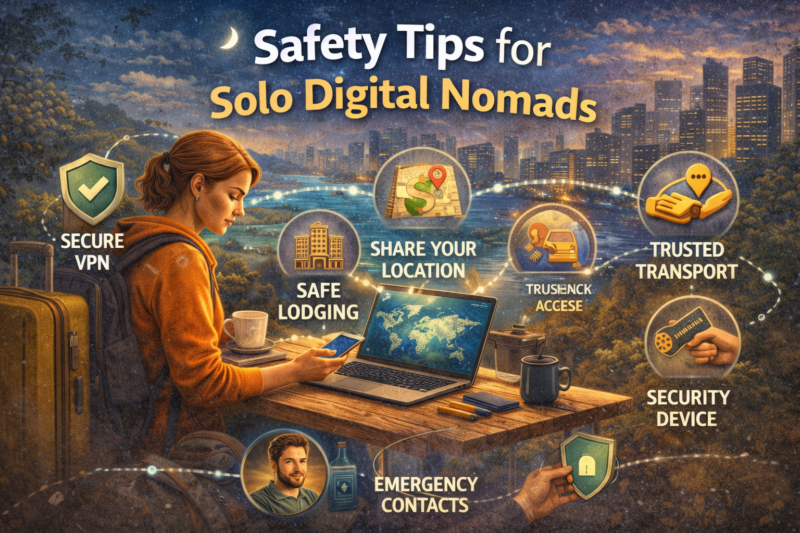
- Research destinations carefully and prioritize safe neighborhoods, reliable accommodation, and good infrastructure before arriving.
- Stay aware of your surroundings, avoid displaying valuables, and stick to well-lit areas, especially at night.
- Protect your digital life by securing devices, backing up data, and being cautious with public WiFi.
- Keep important documents, cash, and cards organized and stored securely in multiple places.
- Stay connected with trusted contacts and share your itinerary so someone always knows where you are.
Working remotely while traveling the world is an incredible privilege. You can wake up in one country, finish work from a café, and watch the sunset somewhere entirely new. That kind of freedom is hard to beat.
But when you travel alone, safety becomes your personal responsibility. There is no coworker, travel partner, or colleague automatically looking out for you. Your awareness, preparation, and habits matter more than anything else.
The good news is that solo travel does not have to be risky. With the right precautions, it can actually be one of the safest and most rewarding ways to explore the world.
Over the years, I have noticed something simple. The nomads who travel comfortably for years are not necessarily the boldest. They are the most prepared.
Let’s walk through the practical habits that make a real difference.
Choose Destinations and Neighborhoods Carefully
Safety starts before you even book a flight.
Different cities, and even different neighborhoods within the same city, can vary significantly in safety, infrastructure, and accessibility. Doing some research ahead of time can prevent many problems later.
Look for areas known for good public transport, reliable internet, and active communities of travelers or expatriates. Cities that attract remote workers often have well established coworking spaces, international healthcare options, and safer accommodation zones.
Accommodation matters as well. Well reviewed apartments, hotels with security staff, or buildings with controlled entry tend to offer more protection than isolated budget options.
It is tempting to save money by choosing the cheapest place available. In practice, paying slightly more for a secure neighborhood is often the better decision.
Stay Aware of Your Surroundings
Situational awareness is one of the most effective safety tools a solo traveler has.
Most incidents involving tourists happen when someone appears distracted or unfamiliar with their surroundings. Constantly looking at your phone while walking through an unfamiliar street is a perfect example.
Try to move confidently, even if you are still figuring things out. If you need to check directions, step into a shop or café first. That small adjustment reduces the chance of attracting unwanted attention.
It is also wise to avoid isolated streets at night and stick to well lit areas with regular foot traffic. Busy streets, restaurants, and public spaces naturally provide more safety.
Trust your instincts as well. If a situation feels uncomfortable, remove yourself from it quickly and calmly.
Protect Your Devices and Digital Life
For digital nomads, your laptop and phone are not just gadgets. They are your entire livelihood.
Losing your laptop while traveling does not only mean replacing hardware. It could also interrupt your income, client communication, and access to important accounts.
Simple precautions go a long way. Never leave your laptop unattended in public spaces. Use strong passwords and enable two factor authentication on critical accounts. Back up important files regularly so that you are not dependent on a single device.
Public WiFi networks are another common vulnerability. When using shared networks in cafés, airports, or coworking spaces, it is wise to secure your connection and avoid accessing sensitive financial accounts.
Taking a few minutes to protect your digital environment can prevent major problems later.
Keep Documents and Money Organized
One of the most stressful situations while traveling is losing a passport or bank card.
The easiest way to reduce risk is to never store everything in one place. Keep your passport, cash, and cards separated when possible. That way, losing one item does not leave you completely stranded.
Digital copies of important documents are also extremely helpful. Having scans of your passport, visa, and insurance information stored securely can speed up the replacement process if something goes wrong.
Another useful habit is carrying only what you actually need for the day. If you are going out for dinner or exploring a neighborhood, you probably do not need every card you own.
The less you carry, the less you risk losing. Have an emergency fund somewhere safe, ideally overseas, but accessible only by you.
Use Safe Transportation
Transportation decisions often affect safety more than people realize.
When arriving in a new city late at night, it is usually safer to arrange transportation through trusted services rather than negotiating with random drivers at the airport.
In many destinations, official ride services or registered taxis provide a more reliable option. They allow you to track routes and maintain a digital record of the trip.
Public transportation is generally safe in most major cities, but it helps to research common routes and schedules in advance. Knowing how to get around reduces the chances of ending up in unfamiliar or poorly lit areas.
Planning transportation before heading out saves time and lowers stress.
Stay Connected With Someone You Trust
One of the simplest safety habits is also one of the most overlooked.
Let someone know where you are.
Sharing your itinerary with a trusted friend or family member ensures that someone always has a basic idea of your location. Even simple check ins from time to time can make a difference.
Having a local SIM card or reliable mobile data is equally important. Being able to access maps, transportation services, and emergency contacts quickly is essential when navigating unfamiliar places.
Connectivity is no longer a luxury for digital nomads. It is a core safety tool.
Avoid Common Travel Scams
Tourist scams exist in nearly every popular destination. Fortunately, most of them follow predictable patterns.
Taxi overcharging, distraction techniques for pickpocketing, and fake service offers are among the most common examples. Learning about these scams before arriving helps you recognize them immediately.
Confidence also helps. Scammers tend to target travelers who look uncertain or confused. Walking with purpose and staying alert discourages opportunistic behavior.
Another simple habit is avoiding real time location sharing on public social media while traveling alone.
Posting about a destination after leaving the location is generally safer … or just never doing this at all and avoiding social media like the plague.
Respect Local Culture and Norms
Safety is not only about crime prevention. Cultural awareness plays a major role as well.
Different countries have different expectations regarding clothing, social behavior, and public interaction. Ignoring those norms can unintentionally create uncomfortable situations.
Dressing in a way that blends with local customs and observing how residents behave can help you integrate more naturally into your surroundings.
Blending in does not mean hiding your identity. It simply means avoiding unnecessary attention.
When you respect local culture, you often receive the same respect in return.
Balance Independence With Community
Traveling alone does not mean isolating yourself completely.
Coworking spaces, nomad communities, and local meetups provide valuable social connections. They also offer practical safety benefits.
When you know other remote workers in a city, you gain access to local advice about safe neighborhoods, transportation tips, and healthcare options.
Personally, I have found that connecting with other travelers often provides the most useful insights. People who are already living in a destination usually know which areas to avoid and which places feel comfortable.
Community can quietly become one of your strongest safety resources.
Conclusion
Solo digital nomad life combines freedom with responsibility – less so than being an expat dad, but still. The ability to live and work anywhere comes with the task of managing your own safety.
Fortunately, most safety practices are simple. Research your destination, stay aware of your surroundings, secure your devices, and keep someone informed about your travel plans.
Over time, these habits become second nature. They allow you to explore new places confidently while maintaining peace of mind.
The goal is not to travel in fear. It is to travel intelligently.
When preparation meets curiosity, the world becomes a remarkably welcoming place.