Best VPNs for Travel & Remote Work

Key Take-Aways
- A quality VPN protects sensitive data on public Wi-Fi networks and significantly improves your overall digital security while working from anywhere.
- Industry leaders like NordVPN and PIA stand out as the top rated VPNs for travelers moving between global destinations.
- Choosing the ideal application comes down to your operational priorities, whether you require ultimate tracking protection, simple setups, or infinite connections.
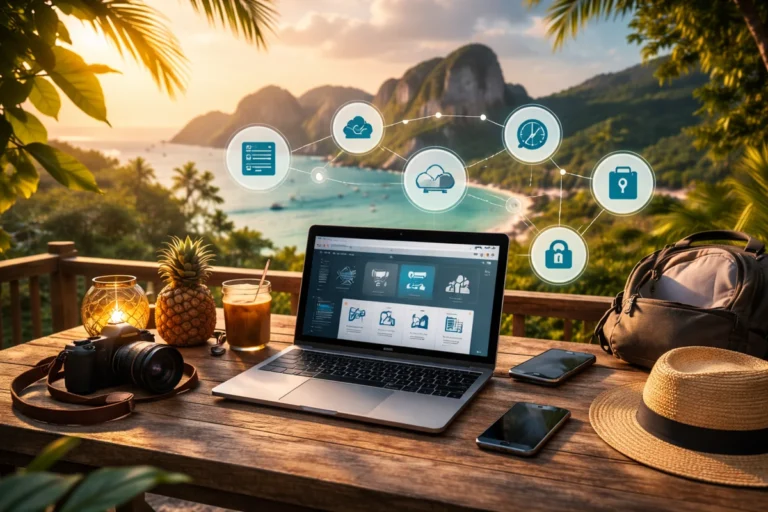
If you spend any amount of time working remotely, you have likely connected to some highly questionable Wi-Fi networks.
We’ve all been there, and to my regret, so have I.
Airport lounges, crowded transit hubs, local coffee shops, and bustling shared work areas are sometimes part of the daily routine – it’s the digital nomad life.
Sometimes you find yourself in short-term rental apartments where the physical router looks like it barely survived multiple generations of global guests.
Most of the time, your daily sessions conclude without any noticeable security incidents.
However, when your monthly income directly depends on staying connected and safeguarding sensitive information, be it your own or that of your clients, relying purely on luck is an incredibly dangerous operational strategy.
That is precisely why setting up a virtual private network has become an indispensable requirement.
Doesn’t matter if you just use it to obfuscate your IP-address to download some movies, change your GEO so you can access certain websites, or protect yourself from hackers – a VPN is a cheap and highly effective way to add a strong layer of digital protection.
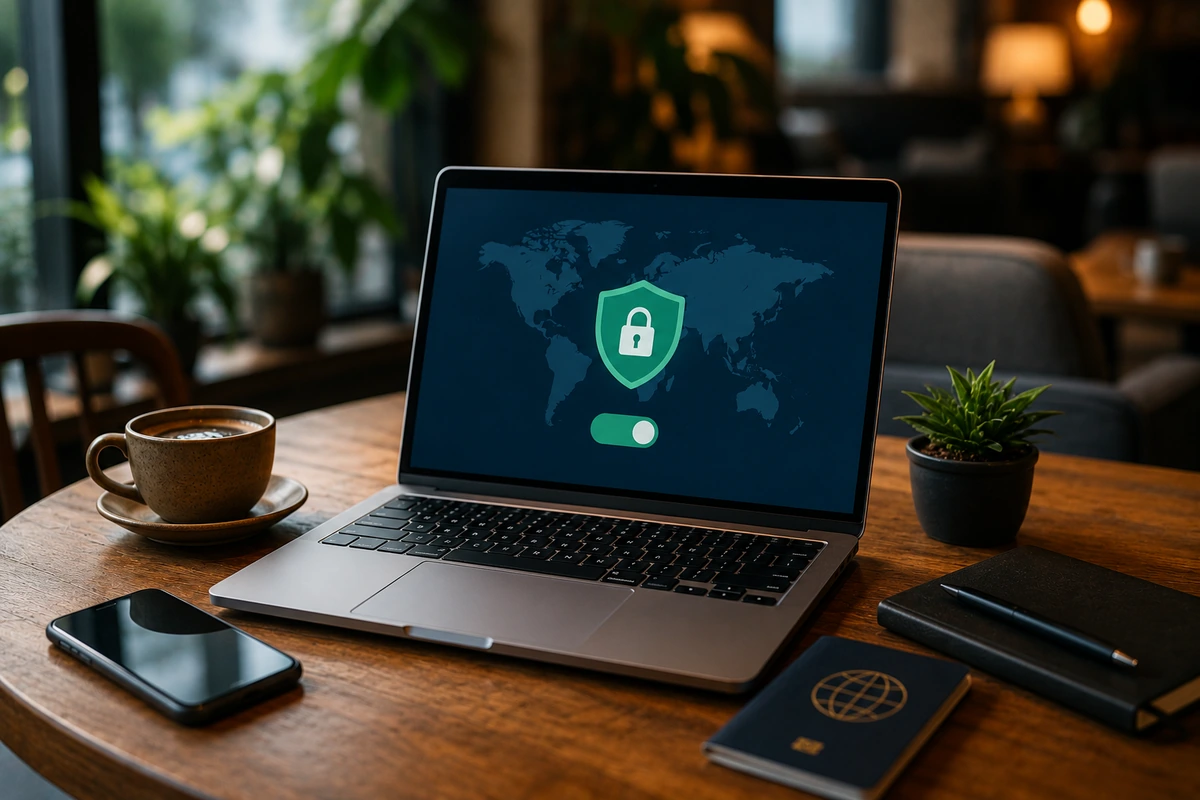
How? A premium virtual private network creates a highly secure, encrypted connection between your device and the broader internet.
While it is not a magical cure-all that automatically solves every digital vulnerability, it dramatically improves your operational privacy.
For modern location-independent professionals, remote employees, independent freelancers, and online business owners, a reputable application is one of those foundational utilities that quietly earns its place in a permanent professional setup.
I’ve been using a VPN for many, many years now, and I consider it an absolute must for any digital nomad. For most nomads, I can strongly recommend NordVPN, because it offers the strongest overall “toolkit”, backed by robust protection at an affordable price.

What Makes a Good Travel VPN?
Not every product on the market provides identical structural quality.
- Certain providers focus almost exclusively on maximizing raw throughput speeds, while alternative companies dedicate their development resources toward maximizing deep privacy infrastructures.
- Some software setups are explicitly designed to be approachable for absolute beginners, whereas advanced tools cater directly to technology enthusiasts who want complete control over manual settings and port configurations.
When you are actively building a lifestyle around mobile operations, finding the best VPN for travel and remote work requires identifying which core components actively support your workflow.
In my opinion, based on years of experience and a small amount of expertise in this area due to helping other nomads, a good travel VPN has to provide the following:
- Fast and Stable Performance
- Kill Switch Protection
- Independently Audited Privacy Policies
- Wide Server Coverage
Now let’s look at my #1 recommended travel VPN for nomads.
NordVPN
NordVPN consistently ranks as one of the most reliable options within the modern cybersecurity landscape.
It effortlessly merges:
- High-speed architecture
- Massive server availability
- Advanced defensive utilities
- A clean history of successful third-party structural reviews
For location-independent workers trying to establish a secure workspace, it delivers an exceptional balance between instant accessibility and complex security modifications.
One of its primary operational benefits is its approachability.
- Early-stage professionals can install the client software and activate comprehensive protection with a single click.
- Simultaneously, experienced entrepreneurs retain access to sophisticated configurations like obfuscated servers and specialized double-encryption pathways.
The client software operates fluidly across all major desktop systems and mobile platforms, making it remarkably simple to protect every device inside your gear collection.
Private Internet Access
Private Internet Access, widely known throughout the technology industry as PIA, has operated within the consumer encryption space for over a decade and remains an incredibly popular choice for experienced remote workers.
I’ve used this one extensively, and if it weren’t for NordVPN, it’s the one I’d recommend.
Its primary competitive strengths include an enormous server infrastructure, highly granular configuration settings, and incredibly competitive long-term pricing structures.
- Custom Encryption Levels: Tweak settings between AES-128 and AES-256 to balance speed and absolute defense.
- Granular SOCKS5 Proxy Access: Perfect for developers needing secondary authentication layers.
- Massive Server Network: Substantial node density ensures you can always find an uncrowded server pathway.
It’s also extremely easy to set up and use. Pick a server, click connect, and you’re good to go.
The main reason it’s not my #1 pick anymore (apart from the existence of NordVPN) is because I sometimes notice disconnects, even when there’s no problem with my internet connection.
Should You Use a Free VPN?
This question comes up all the time in remote work and digital nomad communities. The straightforward truth? Your decision should come down to your professional liability.
A few reputable security companies offer legit free plans with strong privacy protections. But these free tiers almost always come with built-in speed, data, or feature limits.
If you’re just checking transit maps or updating a personal blog, those limits are fine.
But if you’re running a business, presenting live decks to clients, handling client financial data, or working full-time remotely, paying for a subscription is just a smart business cost.
When your income depends on a stable connection, reliability is worth far more than saving a few bucks a month.
So in short, should you use a free VPN? In almost every case, I’d say “no, don’t use a free VPN, cough up the few bucks a month and get quality digital protection”.
Conclusion
For digital nomads and remote workers, a VPN is no longer optional tech-enthusiast software.
In my opinion, it’s a basic requirement for a secure setup. It acts as your first line of defense against network threats, protecting your work wherever you happen to set up shop.
Whether you’re managing affiliate sites from a café in Thailand, pushing code in a Lisbon coworking space, or organizing your money using the best budgeting apps for digital nomads, a solid VPN gives you essential operational safety.
The best choice isn’t the one with the flashiest ads or the biggest marketing budget. It’s the service that fits seamlessly into your daily routine, protects your client data, delivers reliable speeds, and gives you total peace of mind whenever you join an unfamiliar network.
I’ve been using a VPN for many, many years now, and I consider it an absolute must for any digital nomad. For most nomads, I can strongly recommend NordVPN, because it offers the strongest overall “toolkit”, backed by robust protection at an affordable price.