
TLDR
- Medical treatment abroad can be extremely expensive without international travel insurance coverage.
- Many countries require proof of insurance for long-stay visas or entry approval.
- Travel insurance protects against medical emergencies, evacuation, trip interruption, and liability.
- Digital nomads face higher risk exposure due to long stays and frequent border crossings.
- A structured insurance policy is part of a sustainable, risk-aware financial strategy.
When you travel for two weeks, skipping insurance might feel like a gamble. When you travel for months or years while earning remotely, it is not a gamble anymore. It is a financial liability.
Digital nomads operate without the safety net of a fixed employer, domestic healthcare access, or predictable geography. If you are serious about building wealth while living globally, risk management is not optional. Travel insurance sits at the center of that structure.
Over the years, I have seen nomads obsess over exchange rates and remote income tools while ignoring the single expense that can wipe out savings overnight. Insurance is not glamorous. It is not exciting. But it is one of the smartest financial decisions you can make.
Medical Costs Abroad Are Not The Same Everywhere
Healthcare pricing varies dramatically between countries. In some regions, private hospital treatment must be paid upfront before care begins. In others, emergency evacuation to a different facility or country may be necessary.
A serious accident requiring surgery, hospitalization, or intensive care can easily cost tens of thousands of dollars in countries with private healthcare systems. Without insurance, those bills fall directly on you.
Travel insurance policies designed for long-term travelers typically cover emergency medical treatment, hospital stays, and in many cases medical evacuation to the nearest suitable facility. That evacuation alone can cost more than most nomads carry in liquid savings.
Evacuation and Repatriation Are Often Overlooked
Medical evacuation coverage is one of the most important components of travel insurance. If you are injured in a remote area or on an island without advanced facilities, you may need air transport to a larger hospital.
Repatriation coverage goes one step further. It covers the cost of returning you to your home country if medically necessary.
These services are expensive because they involve aircraft, medical personnel, and international coordination. Without insurance, the logistical and financial burden can be overwhelming.
Many Countries Require Insurance For Visas
An increasing number of countries now require proof of health or travel insurance for visa approval, especially for long-stay or digital nomad visa programs.
Several European countries require insurance that meets specific minimum coverage thresholds for medical expenses. Other countries in Asia and the Middle East have introduced similar requirements for long-term stays.
If you plan to stay legally and long term, insurance is often not just smart – it is mandatory.
Travel Interruptions Can Disrupt Income
Digital nomads depend on stable connectivity and consistent work output. A sudden illness, injury, or family emergency can interrupt your travel plans and your income at the same time.
Comprehensive travel insurance policies often include trip interruption and trip cancellation benefits. These can reimburse non-refundable accommodation or transport costs if you must cut a stay short due to covered reasons.
If you prepay several months of accommodation and then face an emergency, that reimbursement can soften the financial blow.
Personal Liability Coverage Matters More Than You Think
Liability coverage is rarely discussed, but it is crucial. If you accidentally cause injury to someone else or damage property while abroad, you may be legally responsible.
Medical bills and legal claims can escalate quickly depending on the country. Travel insurance policies often include personal liability protection within defined limits.
This is particularly important if you rent apartments, drive scooters, or participate in activities where accidents are possible.
Health Insurance At Home May Not Cover You Abroad
Many domestic health insurance policies limit or exclude coverage outside your home country. Some provide minimal emergency reimbursement but do not cover long-term stays or routine treatment abroad.
Before assuming you are covered, review your policy details carefully. In many cases, domestic insurance is designed for residents, not mobile professionals spending extended time overseas.
Travel insurance tailored for long-term travel fills that gap.
Coverage Duration Matters For Nomads
Short-term holiday insurance is not built for year-round travel. Digital nomads typically require policies that allow multi-month or annual coverage across multiple countries.
Look at maximum trip duration limits, country exclusions, and whether home visits are covered. Some policies reset coverage when you briefly return home. Others do not.
Understanding these mechanics avoids unpleasant surprises when you need to make a claim.
Pre-Existing Conditions Require Careful Review
Most travel insurance policies define how pre-existing medical conditions are handled. Some exclude them entirely. Others offer coverage if conditions are declared and approved.
Full disclosure is critical. Failing to declare relevant conditions can invalidate coverage.
If you have ongoing medical needs, selecting a policy that clearly addresses them should be part of your decision-making process.
Adventure Activities And Coverage Limits
Many nomads surf, dive, hike, or ride motorcycles while abroad. Not all policies automatically cover higher-risk activities.
Some insurers classify activities into risk tiers. Standard coverage may exclude certain sports unless you purchase an add-on.
Review the policy wording carefully. If you plan to scuba dive or trek at altitude, make sure the activity is explicitly covered.
Digital Equipment And Theft Protection
Laptop theft is a common concern among remote workers. Some travel insurance plans include baggage and personal electronics coverage, though limits may apply.
Pay attention to single-item limits, depreciation rules, and requirements such as reporting theft to local authorities.
For expensive setups, separate gadget insurance might make sense, but at minimum your travel policy should offer basic protection.
Mental Health And Outpatient Treatment
Coverage for mental health support abroad varies significantly between insurers. Some policies include emergency psychiatric care. Others exclude it.
Outpatient visits may also have different reimbursement structures than hospital stays.
Understanding what is covered ensures that you are not caught off guard if you need non-emergency medical support.
Insurance Is A Financial Strategy, Not Just A Safety Net
At SG Nomad Wealth, we look at insurance through a financial lens. It is not about fear. It is about preserving capital.
A single uninsured medical emergency can erase years of disciplined saving and investing. When you view insurance as asset protection, the monthly premium feels less like an expense and more like a safeguard.
Personally, I treat insurance premiums as a fixed operational cost of location independence. It sits in the same category as accounting software or secure banking.
Cost Versus Risk
Travel insurance premiums vary based on age, coverage level, destination, and duration. Comprehensive long-term policies generally cost more than short vacation plans.
However, when compared to potential medical or evacuation costs, the premium is relatively small.
The decision becomes straightforward when you frame it as risk transfer. You are paying a predictable amount to avoid unpredictable financial exposure.
Claims Processes And Documentation
Before purchasing a policy, review how claims are handled. Check whether the insurer offers direct billing with hospitals or requires upfront payment and reimbursement.
Keep copies of medical reports, receipts, and police reports if needed. Organized documentation speeds up reimbursement and reduces disputes.
Good insurance is not only about coverage limits. It is about operational clarity.
Conclusion
Digital nomad life combines freedom with responsibility. You manage your own income, your own taxes, your own logistics. Insurance fits squarely into that ecosystem.
Medical emergencies, evacuation needs, liability risks, and visa requirements are not theoretical concerns. They are documented realities of international travel.
If you are building a life that spans borders, protect it with structure. Travel insurance is not a luxury add-on. It is a foundational component of financial stability while living globally.
Mobility plus money plus method. That equation only works when risk is managed properly.
Blog
-
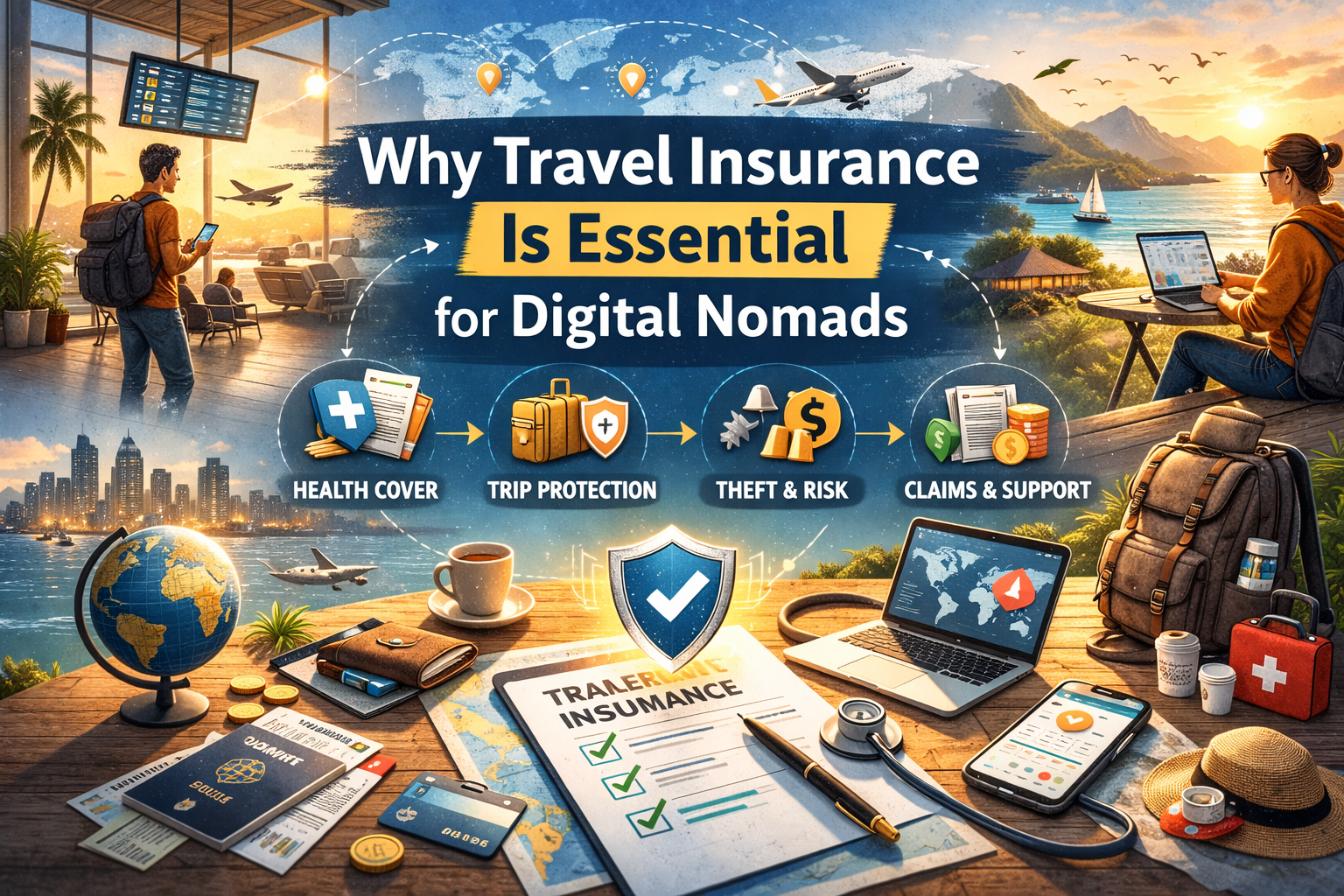
Why Travel Insurance Is Essential for Digital Nomads
Insurance is not glamorous. It is not exciting. But it is one of the smartest…
-
Best Budgeting Apps for Digital Nomads (2026 Guide)
Budgeting apps are sophisticated enough to support location-independent professionals in real, practical ways.
-
Digital Nomad Finance 101: How to Manage Money While Traveling
Here is a practical breakdown of how to manage your finances while traveling, built around…

Leave a Reply