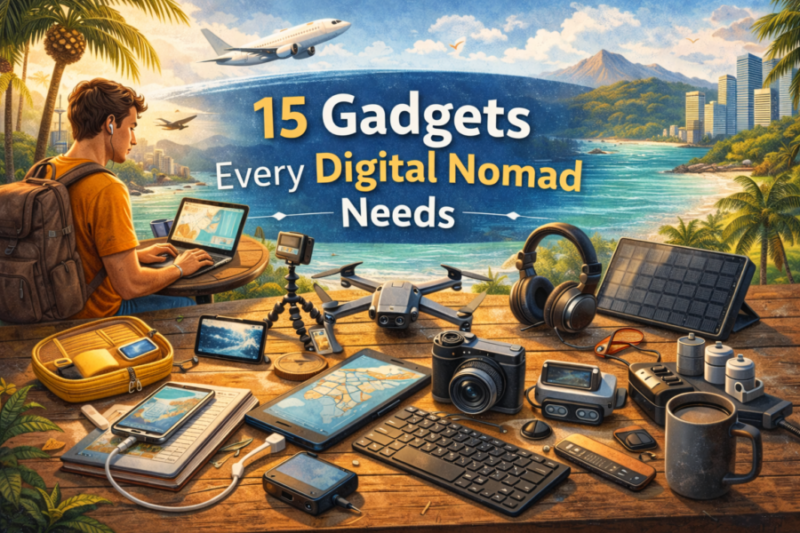
15 Gadgets Every Digital Nomad Needs
TLDR
- Power, storage, and connectivity gadgets are essential to nomad productivity and peace of mind.
- USB-C Power Delivery chargers and a high-capacity power bank keep your gear running anywhere.
- Portable SSDs and rugged HDDs protect your work with fast storage and real backups.
- Connectivity tools like eSIM-enabled phones and travel routers prevent network downtime.
- Airline battery rules matter – carry power banks and spare batteries in carry-on only.
Traveling and working at the same time is exhilarating, but it also means you rely on your gear every day. Good tools can make the difference between smooth work sessions and needless stress in an airport, café, or hostel.
For digital nomads, gadgets are not just conveniences – they are productivity gear, power backups, connectivity lifelines, and security enhancers.
After years of juggling devices across continents, here’s a practical list of 15 gadgets you actually need. These are tools that earn their keep, save you time, and help you stay productive on the move.
1. USB-C Laptop with Strong Battery Life
Your laptop is your main productivity hub. Choose one that charges over USB-C using Power Delivery, supports long battery life, and has a keyboard you can type on for hours. Thin-and-light is good, but make sure it has enough power and ports to handle your workflow.
2. 100W+ GaN Charger
Modern gallium nitride chargers are smaller, lighter, and more efficient than older brick chargers. A 100W+ GaN charger lets you power your laptop, phone, and headphones from a single unit. This reduces clutter and weight in your bag.
3. Portable Power Bank (Carry-On)
A power bank rated under 100 watt-hours (Wh) keeps phones and tablets topped up between outlets and fits most airline carry-on rules. Larger power banks are often useful too, but always confirm airline limits before flying, and keep these batteries in hand luggage only, not checked bags.
4. USB-C Multiport Hub
USB-C hubs add missing ports like Ethernet, HDMI, SD card readers, and more. When the Wi-Fi is unreliable, plugging into Ethernet through a hub can be a huge productivity help. It also helps when you present or expand your screen setup.
5. Fast Portable SSD
A portable NVMe SSD gives you fast read/write speeds for project files, media, and local backups. External SSDs are far more robust than thumb drives and let you work with large files without lag. Look for drives with durable cases.
6. Rugged External HDD
For long-term backups and cold storage, rugged external hard drives are still the most cost-effective option. Use one for full system images and extended archives. Pair it with an encrypted cloud backup for the best resilience.
7. Noise-Cancelling Headphones
Active noise cancellation trims out background noise in planes, co-working spaces, and cafés. Good ANC headphones also let you take calls with clearer voice quality. They’re one of those things you notice instantly on travel days.
8. Portable USB-C Monitor
A compact USB-C monitor adds useful second-screen real estate when you need it. It’s especially handy for spreadsheet work, multi-window tasks, and editing. Modern travel monitors are lightweight and draw power from the USB-C port, which is nice.
9. Travel Router with VPN Support
A small travel router lets you control your own local network at hotels or Airbnbs. Set up a VPN on it once, and all devices behind it get encrypted internet without separate apps. It’s also useful when a location only offers a single device connection.
10. Unlocked Phone with eSIM
Phones that support eSIM technology let you set up local or travel plans without swapping SIM cards. eSIMs are growing rapidly, and global eSIM smartphone connections have nearly doubled year after year, with hundreds of millions of connections worldwide. Having an unlocked phone with eSIM capability lets you buy data plans for different regions without physical SIM hassles.
11. Hardware Crypto Wallet
If you manage crypto as part of your remote income strategy, a hardware wallet keeps your private keys offline and secure. Always store backup keys in at least two safe offline locations. A hardware wallet is not a travel toy – it is serious security for money you own.
12. Cable Organizer and Toolkit
A simple organizer with short cables (USB-C, Lightning if needed), adapters, and a tiny screwdriver set keeps you ready for small fix-ups. Cut down on cable clutter and avoid fishing around backpacks for the right connector.
13. Compact Bluetooth Keyboard
Writing, coding, or editing is much easier with a comfortable keyboard. A compact Bluetooth mechanical or travel keyboard connects to your devices without cables and can transform editing sessions on planes or in lounges.
14. Security-Focused Backpack
A backpack with lockable zippers, padded compartments, and anti-theft features protects your devices in transit. Good bags balance security and comfort because you’ll be carrying them often.
15. Pocket Luggage Scale and Digital Lock
A lightweight luggage scale prevents surprise overweight baggage fees at check-in. A TSA-accepted digital lock secures your checked luggage while still letting airport staff inspect it if needed without cutting the lock.
Conclusion
Packing well is part of nomad life. These gadgets are not about having the flashiest tech – they are about reliability, resilience, and real-world usefulness.
Focus on power gear first (chargers, batteries, hubs), then add storage and connectivity tools. Pack redundancy the smart way: local backups, cloud sync, and secure connectivity that doesn’t leave you stranded when the Wi-Fi falters.
With the right setup, you keep working smoothly even when your location changes every few weeks. That’s what mobile work and financial peace of mind look like in practice.
Blog
-

Freelancing vs Remote Job: What’s Better for Nomads?
If you want to live and work from anywhere, do you build a freelance career,…
-

Top Travel Credit Cards for Digital Nomads
If you travel regularly while earning remotely, the right credit card is one of your…
-

Emergency Fund for Nomads: How Much Do You Need?
For digital nomads, an emergency fund is not optional. It is foundational.
