
TLDR
- Use multi-currency or digital banking solutions to reduce foreign exchange and transaction fees.
- Track expenses weekly and maintain a structured budgeting system.
- Build a 3 to 6 month emergency fund before committing to long-term travel.
- Avoid dynamic currency conversion and unnecessary ATM fees.
- Secure accounts with two-factor authentication and maintain financial redundancy.
Managing money as a digital nomad is less about spreadsheets and more about systems. When your location changes every few weeks or months, your financial setup needs to be stable enough to handle movement, currency shifts, and unexpected costs.
Travel amplifies small financial mistakes. A few percentage points in foreign transaction fees or sloppy budgeting can quietly drain thousands over time. If you build a simple but resilient structure, though, money becomes one less thing to worry about while you focus on earning and living well.
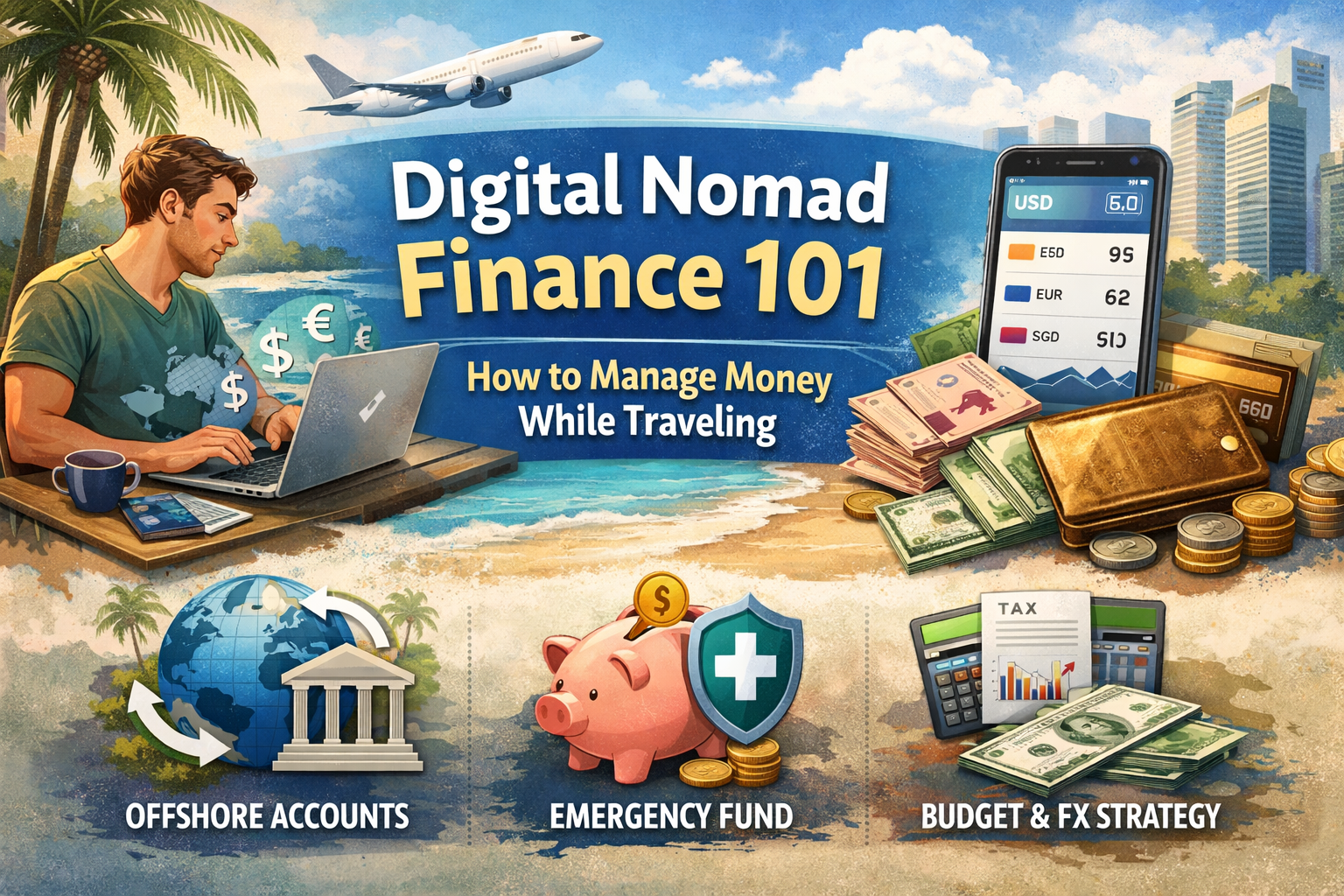
Here is a practical breakdown of how to manage your finances while traveling, built around structure, risk management, and long-term sustainability.
Start With the Right Banking Setup
Traditional domestic bank accounts often charge foreign transaction fees, ATM fees, and unfavorable exchange rate markups when used abroad. These small costs compound quickly if you spend months outside your home country.
Many digital nomads now rely on banks or financial technology platforms that support multi-currency accounts. These allow you to hold balances in different currencies and convert at competitive rates. That flexibility reduces unnecessary conversion costs and makes international payments smoother.
The goal is simple: minimize friction and hidden charges.
Use Multi-Currency Accounts Strategically
Instead of constantly converting money back and forth, hold funds in the currency you spend most frequently. If you spend several months in the Eurozone, for example, it makes sense to maintain a euro balance.
This approach helps you avoid repeated exchange spreads. It also gives you clarity when budgeting because you are not mentally recalculating every purchase in your home currency.
If you receive income in multiple currencies, separating those streams into dedicated balances can simplify accounting and tax preparation later.
Build a Clear Budget Framework
Nomad life feels flexible, but your finances should not be random. A structured monthly budget gives you visibility into housing, food, transport, insurance, and recurring subscriptions.
Tracking expenses weekly is usually enough to stay aligned. You do not need complex software if you do not want it. A spreadsheet or budgeting app works fine as long as you review it consistently.
The key is not perfection. It is awareness.
Establish an Emergency Fund Before You Travel
An emergency fund is not optional when you are mobile. Flights get canceled. Laptops fail. Medical situations happen.
A common financial planning recommendation is maintaining three to six months of living expenses in liquid savings. For nomads, that fund becomes even more critical because you may not have local support systems in place.
Keep this money separate from your daily spending account. Mentally and practically, it should be protected.
Reduce Foreign Transaction Fees
Foreign transaction fees typically range from around 1 to 3 percent per purchase depending on your bank and card provider. That may sound small, but over a year of international spending it adds up.
Using debit or credit cards that waive foreign transaction fees is one of the simplest upgrades you can make. Many international travel-focused cards offer this feature.
Before you depart, review your card terms carefully. Do not assume anything.
Always Pay in Local Currency
When paying by card abroad, you are often asked whether you want to pay in your home currency or the local currency. Choose the local currency.
Paying in your home currency triggers dynamic currency conversion, which often includes additional markups. Paying in local currency allows your bank or card network to apply its exchange rate, which is typically more favorable.
It is a small decision at checkout, but it matters over time.
Understand ATM Fee Structures
ATM withdrawals can involve fees from your bank, the ATM operator, or both. Some banks reimburse international ATM fees. Others do not.
Before traveling, review your bank’s international withdrawal policy. If fees are high, consider opening an account with more favorable global withdrawal terms.
It is also wise to withdraw larger amounts less frequently to reduce per-transaction fees, provided you are comfortable carrying that cash safely.
Protect Your Accounts While Traveling
Public Wi-Fi networks are common in airports, cafes, and co-working spaces. They are also potential security risks.
Use two-factor authentication on all financial accounts. Authenticator apps generally offer stronger protection than SMS-based codes.
Keeping your devices updated and avoiding financial transactions on unsecured networks reduces your exposure to fraud. A hardware security key can add an extra layer of protection for high-value accounts.
Maintain Financial Redundancy
Never rely on a single card or bank account. Cards get blocked for suspected fraud. Wallets get lost.
Carry at least two debit or credit cards from different providers, stored separately. Keep digital copies of important banking information in secure storage.
Redundancy is not paranoia. It is risk management.
Understand Your Tax Obligations
Traveling does not automatically eliminate tax responsibilities in your home country. Tax rules depend on citizenship, residency, and income source.
Some countries tax based on citizenship. Others use residency thresholds. Many digital nomads remain liable for filing even while living abroad.
Consulting a qualified tax professional familiar with international income can prevent serious headaches later. Tax compliance is part of sustainable location independence.
Diversify Your Income Streams
Relying on one client or one revenue source increases risk. If a contract ends unexpectedly, your cash flow stops.
Many nomads build multiple income streams such as freelance services, remote employment, digital products, consulting, or online courses. Diversification stabilizes your monthly revenue and reduces financial anxiety.
It also strengthens your negotiating position with clients.
Monitor Recurring Subscriptions
Cloud software, productivity tools, hosting, insurance, and entertainment subscriptions can quietly multiply.
Review subscriptions quarterly. Cancel what you do not use. Downgrade plans that exceed your actual needs.
Keeping fixed monthly costs lean makes it easier to handle slow income months without stress.
Manage Currency Exposure Thoughtfully
Exchange rates fluctuate constantly. While predicting currency markets is unreliable, you can reduce unnecessary conversions.
Holding funds in a widely used reserve currency such as USD or EUR, then converting only what you need for local spending, can reduce friction.
Use transparent transfer services that clearly disclose exchange spreads and fees. Avoid opaque pricing.
Keep Clear Records for Accounting
If you freelance or run an online business, clean financial records are non-negotiable. Separate business and personal accounts wherever possible.
Track invoices, payments received, business expenses, and travel-related costs. Digital bookkeeping tools simplify this process and reduce errors.
Clean records make tax season faster and reduce the chance of compliance issues.
Review Your Financial Position Weekly
Money management while traveling works best when reviewed regularly. A short weekly review session is enough.
Check balances. Review spending categories. Confirm upcoming large payments such as rent or insurance premiums.
Small weekly adjustments prevent larger financial stress later.
Conclusion
Digital nomad finance is not about chasing loopholes or complicated strategies. It is about clarity, structure, and risk control.
Choose banking tools that reduce fees. Track spending consistently. Maintain emergency savings. Protect your accounts. Understand your tax responsibilities. Build income streams that can withstand disruption.
When your financial system is solid, mobility becomes a genuine advantage rather than a source of uncertainty. Freedom feels better when it rests on structure.
Blog

Category One
This is the first post title
This excerpt introduces the blog post, summarizing its key idea in a concise manner.

Team Member One
Jul 24, 2026

Category Two
This is the second post title
This excerpt introduces the blog post, summarizing its key idea in a concise manner.

Team Member Two
Aug 23, 2026

Category Three
This is the third post title
This excerpt introduces the blog post, summarizing its key idea in a concise manner.

Team Member Four
Oct 14, 2026
Leave a Reply